

I've already written a full write-up on the six months I spent giving Cosequin to Maple, my senior Beagle, every morning without fail. This one is different. This is the review I wish someone had handed me before I bought my first bottle, the one that doesn't just tell you it worked, it tells you what the box doesn't spell out, the math I now do before every refill, and the honest answer to whether I think it's worth the price tag for every dog or just some of them.
Maple is nine, stiff most mornings before she's had a chance to walk it off, and vet-confirmed to have mild arthritis in her hips. Biscuit, my Lab mix, does not get Cosequin, and that's on purpose. He's four, healthy, and food-motivated enough that he'd eat the whole bottle in one sitting if I let him near it. That distinction matters more than most reviews let on, and it's a big part of why I'm writing this one.
Pepper, our tabby, does not get any of this either, obviously, but I bring her up because she's a good reminder of how I read pet product labels in general. She's opinionated about everything from her food to her litter, and she's taught me to read the fine print before I decide something is or isn't working. I applied that same habit to Cosequin, and it changed how I'd actually score this product.
The Quick Verdict
Solid, well-studied joint supplement for a dog with a vet-confirmed reason to be on it, but the label leaves out the parts that decide whether it actually works for you.
Amazon Check Today's Price →Before You Buy Another Bottle Blind, See the Current Price and Count
Cosequin's chewable count and price move around depending on the retailer and the day. Check today's listing before you commit to a dosing plan, not after.
Amazon Check Today's Price on Amazon →How I Actually Use It, No Spin
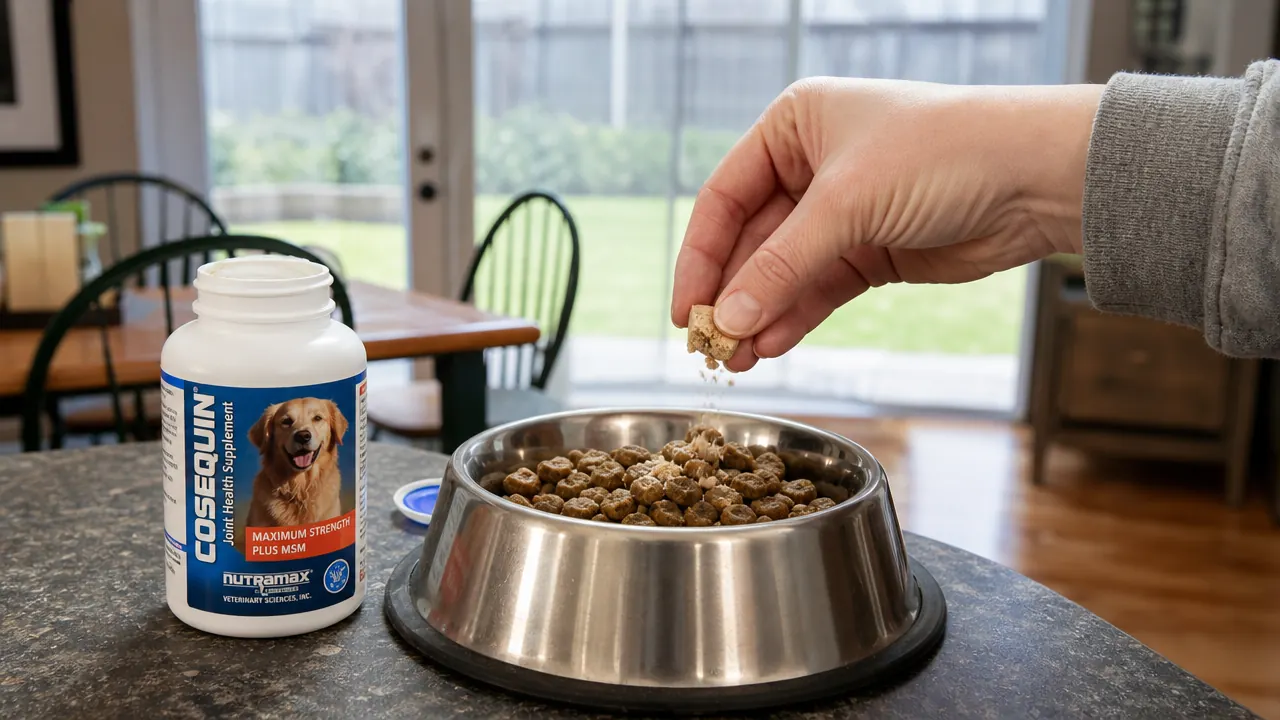
I split a chewable tablet into Maple's kibble every morning, and she eats around it exactly the way you'd expect a picky senior dog to, nosing it to the bottom of the bowl until it's the last thing left. Some mornings I crush it instead, because whole it clearly reads as medicine to her and she stalls out. That's a small, unglamorous detail that never makes it into marketing copy, but if you have a dog who's suspicious of anything that isn't food, plan on it.
I'm not going to repeat the day-by-day timeline here, that's covered in my long-term review. What I want to focus on instead is what I got wrong the first time I bought this, because I think a lot of first-time buyers make the exact same mistakes I did.
The biggest one, I didn't read the dosing chart carefully enough, and I paid for it in lost time before I saw anything change. The second, I assumed a supplement working for someone else's dog on a Facebook group meant it would work the same way for mine on the same schedule. It didn't, and I don't think it does for most people.
What the Bottle Doesn't Spell Out
The front of the box is all confidence, joint support, mobility, healthy cartilage, in big friendly type. The part that actually determines whether the product does anything for your dog is a small chart on the side panel, and it's easy to skim past if you're standing in an aisle or scrolling a product listing on your phone.
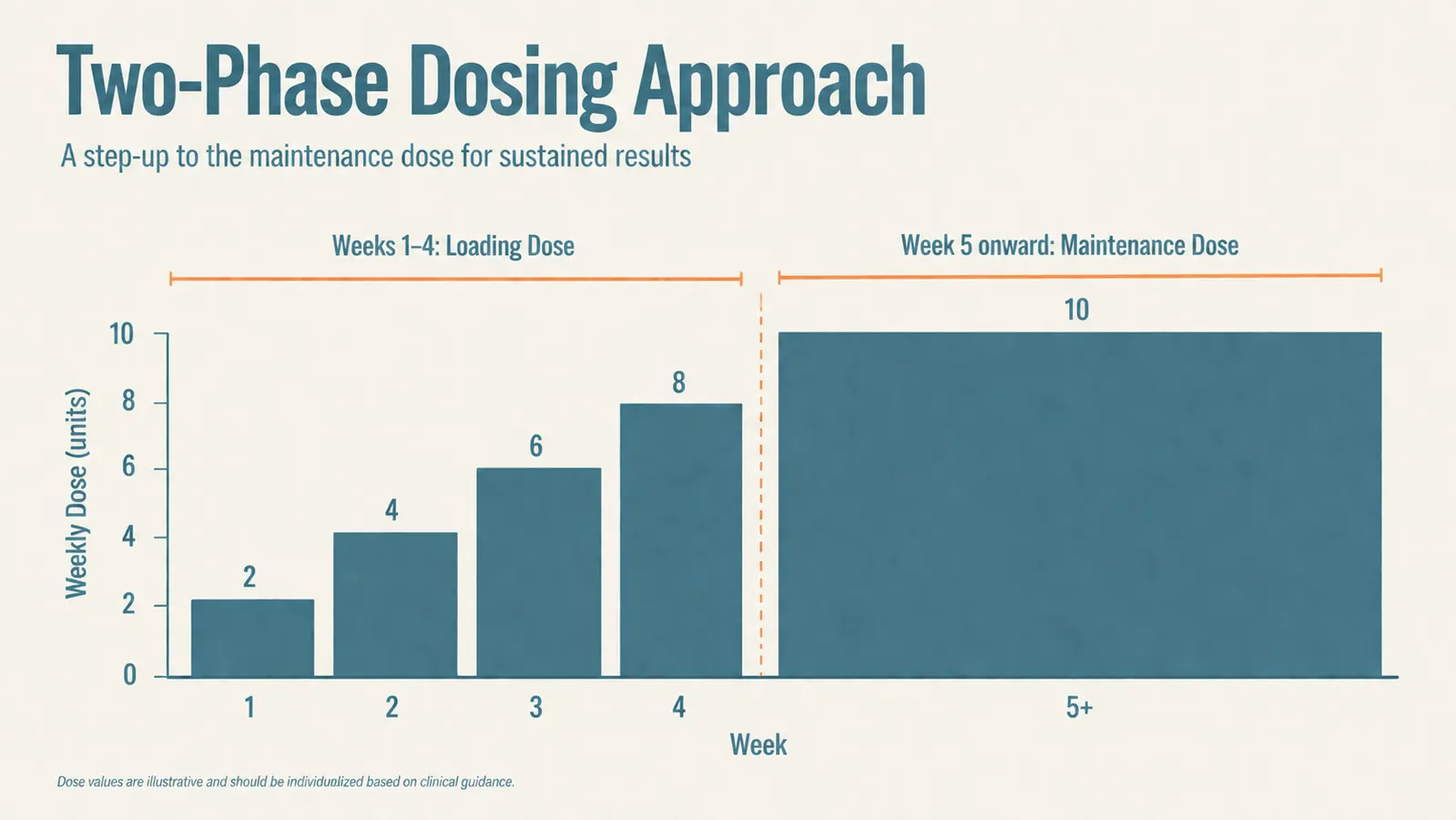
That chart is where the loading dose lives. Cosequin, like most glucosamine and chondroitin supplements, is meant to be given at a higher dose for the first four to six weeks, then dropped down to a lower maintenance dose after that. The idea, as I understand it from talking with our vet, is that it takes a period of consistently higher intake to build up any benefit before a smaller daily amount can maintain it. Skip that front-loaded phase, and you may never give the supplement a fair shot at working.
I didn't catch this the first time. I opened the bottle, saw a single daily amount listed for Maple's weight range, and started right there at what was actually the maintenance dose, not the loading dose. Six weeks in, I saw basically nothing, and I nearly returned the bottle assuming it just didn't work on her. It was only after re-reading the package insert, the little folded paper most people toss without opening, that I realized I'd skipped the whole first phase entirely.
Once I restarted her on the actual loading dose and stuck with it for the full stretch before dropping back down, I finally had a fair test of the product. That's the part I wish the front of the box led with instead of burying in fine print, because the number of one-and-done reviews I've read online that say 'gave it two weeks, no change, returned it' almost certainly includes people who never made it past the loading phase in the first place.
What's Actually in the Bottle
Cosequin's main ingredients are glucosamine hydrochloride and chondroitin sulfate, with manganese to support how the body uses glucosamine. This particular formula also adds MSM, a sulfur compound that's often included alongside glucosamine for general joint comfort. None of these ingredients are exotic or new, they've been studied in various combinations for years, and Nutramax has a long track record in the veterinary supplement space specifically.
What I'd caution against is treating any of this as a guarantee. The FDA doesn't evaluate pet supplements the way it evaluates medications, so claims on the label about supporting joint health are allowed without the same level of proof a prescription drug would need. That doesn't mean the ingredients are useless, the research base for glucosamine and chondroitin in dogs is genuinely more substantial than for a lot of pet supplement categories, but it does mean you should treat this as a supportive product, not a proven cure, and talk to your vet if you want a clearer read on whether it fits your dog's specific diagnosis.
The Cost-Per-Day Math Nobody Actually Does
Here's a habit I picked up after that first mistake, and I do it every single time I'm deciding whether to buy a supplement or refill one. I take today's price, divide it by however many days the bottle will realistically last at the dose my dog needs, and write that number down. Not the count on the label, the actual number of days, because a loading phase burns through tablets roughly twice as fast as the maintenance phase does.
For a 132-count bottle at Maple's maintenance dose, that stretches out to a couple of months. During the loading weeks, it goes noticeably faster, which means the real cost of the first six weeks is higher than the label's per-bottle price makes it look. If you're budgeting month to month the way I do, that first bottle disappearing faster than expected can catch you off guard, especially if you didn't plan for it and assumed one bottle would carry you through the whole trial period.
This is also where I'll be honest about something the comparison article on this site digs into further: a plain glucosamine HCl supplement, without the added chondroitin and MSM, usually comes out to less per day. Cosequin's combination formula is the reason it costs more, and whether that combination is worth the difference is a fair question, not a settled one, even among vets.
I'd also point out that the per-day cost of a chewable supplement, even during the loading phase, is still cheaper than most other joint-related expenses that come with an aging dog, like a vet visit for a mobility check, imaging, or a prescription anti-inflammatory. That's not a reason to skip the vet, it's just context for why I decided the ongoing cost was reasonable for our budget once I understood what I was actually paying for.

Why Some Dogs Show Nothing At All
I want to be straightforward here because I think a lot of reviews oversell this category of supplement. Glucosamine and chondroitin are among the most studied joint ingredients for dogs, but the research on how much they actually help, and for which dogs, is mixed. Some studies show a modest benefit for mild to moderate joint stiffness. Others show very little difference from a placebo. Nobody, including me, can promise you a specific outcome, and I'd be skeptical of any review that does.
In my experience, and this lines up with what I've heard from other owners, dogs with mild, early stiffness tend to be the ones who show some improvement over several weeks. Dogs with more advanced joint disease, real pain, visible limping, reluctance to move at all, are often past the point where a daily chewable is going to move the needle much. That's not a failure of the product, it's a mismatch between what it's designed to do and what the dog actually needs. If your dog is in that second category, a supplement isn't a substitute for an actual vet visit and, if needed, prescription pain management or imaging to see what's really going on in the joint.
There's also plain individual variation. Just like people respond differently to the same over-the-counter pain reliever, dogs respond differently to joint supplements, and some simply don't show much change no matter how consistently you give it. I'll also mention, in the interest of being complete, that Maple had a couple of days of softer stool when we first started the loading dose, which settled on its own within about a week. It wasn't severe, but it's the kind of mild side effect worth watching for, and worth a quick call to your vet if it doesn't resolve or seems worse than that.
Regular Strength vs Maximum Strength, and Whether to Just Ask the Vet First
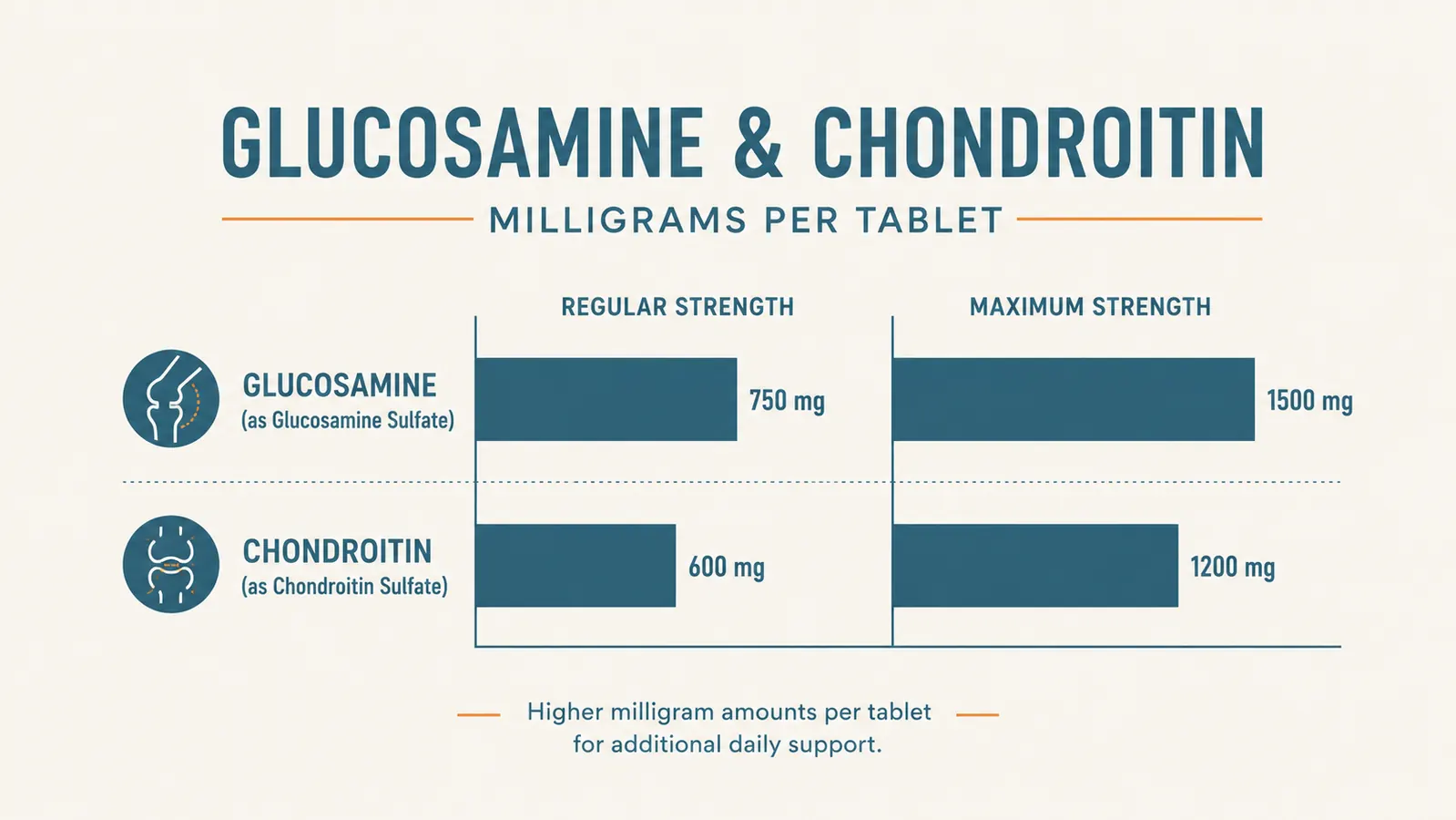
Cosequin also sells a Maximum Strength version alongside the regular chewables, and the difference isn't marketing fluff, it's a higher amount of glucosamine and chondroitin per tablet. That version is generally positioned for larger dogs or more advanced joint concerns, where the standard dose might not be enough to reach an effective daily amount without giving an unreasonable number of tablets. The per-tablet price is higher, but because you often need fewer tablets to hit the same daily target, the actual cost-per-day gap between the two versions is smaller than it looks on the shelf.
What I'd genuinely recommend before buying either one is a quick call to your vet, not because you need a prescription, Cosequin is sold over the counter, but because they can tell you in about two minutes whether your dog's weight, breed, and symptoms line up with the regular formula, the maximum strength formula, or something else entirely. I made that call before I ever opened Maple's first bottle, and it saved me from guessing at a dose based on a shelf chart alone.
I'll say this plainly, a glucosamine chewable, at either strength, is a maintenance and comfort product, not a diagnosis and not a treatment plan. If your dog's stiffness came on suddenly, or looks like real pain rather than general slowness, that's a vet visit first, supplement second, every time.
What I Liked
- Well-established combination of glucosamine, chondroitin, and MSM with a large body of real-world use behind it
- Chewable tablets are genuinely easy to give most dogs, even picky ones, once you find the right method
- Loading dose plus maintenance dose structure is sound if you actually follow it
- Cost-per-day is reasonable once you're only on the maintenance dose
Where It Falls Short
- The loading dose instructions are easy to miss on the label and skipping them is the most common reason people think it 'didn't work'
- Noticeably more expensive per day than plain glucosamine HCl during the loading phase
- Evidence for how much it actually helps is mixed, not guaranteed
- Not a fit for dogs with advanced joint disease who need real medical management
- Younger, healthy dogs are unlikely to need it at all
- Mild, temporary stomach upset is possible when starting the loading dose
The label sells you the destination. It does not sell you the timeline, and it definitely does not sell you the math.
Who This Is For
I think Cosequin makes sense for a dog like Maple, a senior with vet-confirmed mild to moderate stiffness, and an owner who's willing to actually follow the loading dose for the first four to six weeks, track how the dog is moving, and give it a real six to eight week window before deciding whether it's working. It's also a reasonable fit for a budget-conscious owner who wants a well-studied option rather than whatever has the flashiest packaging, and who's comfortable doing a little bit of homework instead of just trusting the front of the box.
Who Should Skip It
I'd skip it, or at least hold off, if your dog is young and healthy and you're buying it purely as insurance against future joint problems, that money is probably better saved for later. I'd also skip it if your dog's mobility issue looks like sudden pain rather than gradual stiffness, that needs a vet's eyes on it, not a supplement aisle decision. And honestly, if you know yourself well enough to know you won't keep up a daily routine for two straight months, this isn't the product that's going to work around that, no supplement is. Same goes if you're hoping for a fast fix within a week or two, that's just not how this category of product is designed to work, no matter what a five-star review promises.
See Today's Price and Count Before You Plan Your Dosing Schedule
If you do decide to try it, do the loading dose math first so you know exactly how long that first bottle will actually last.
Amazon Check Today's Price on Amazon →