
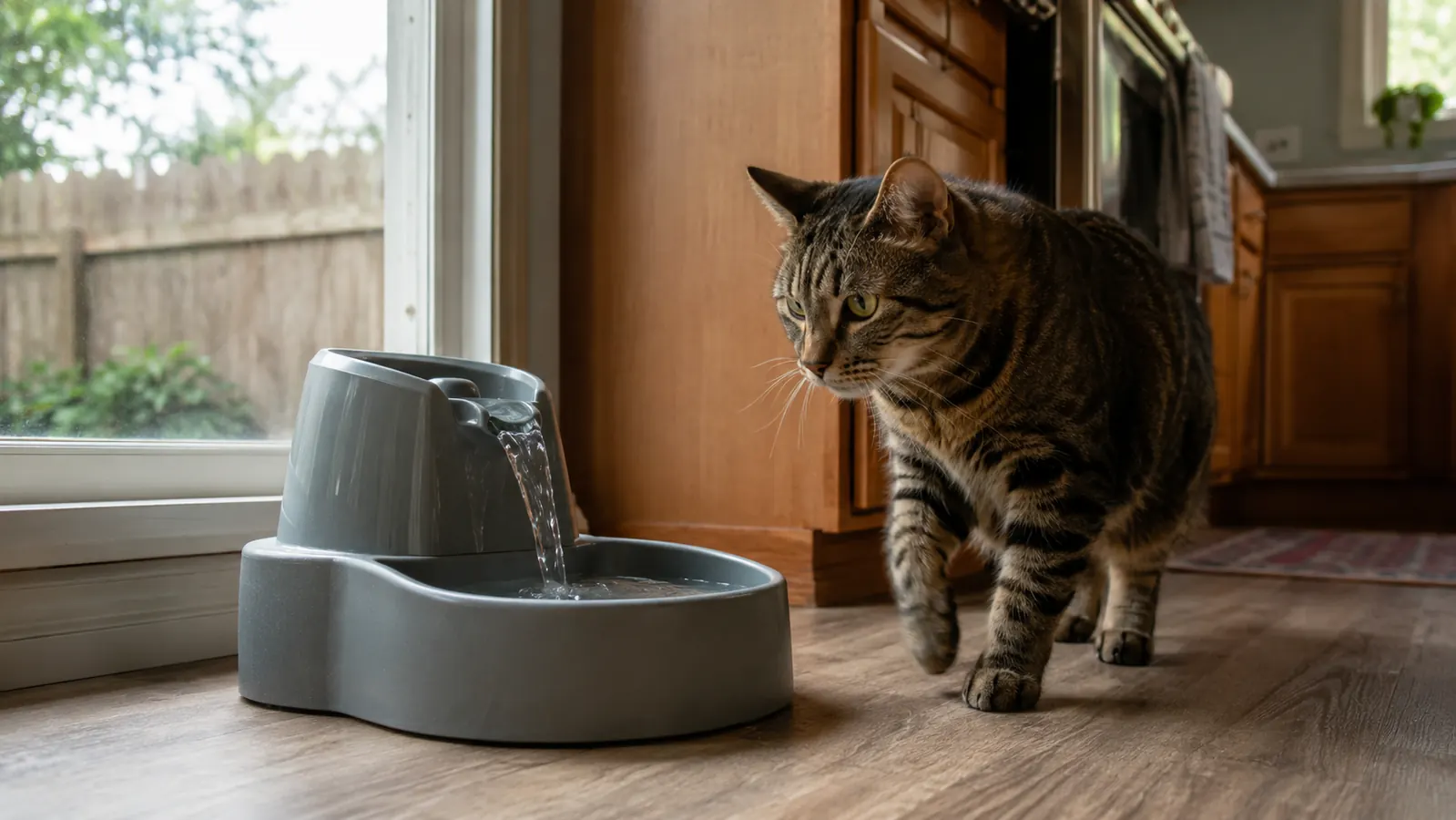
My cat Pepper has never been what I'd call an enthusiastic water drinker. She's a tabby with strong opinions about almost everything, food included, and for years her water bowl sat mostly untouched next to her food dish while she snuck sips from the bathroom faucet whenever I left the door cracked. I'd read enough about cats and urinary issues to know that low water intake isn't something to shrug off, so when I kept seeing the Veken fountain mentioned in cat forums and by our vet tech during a routine visit, I finally bought one. That was six months ago, and it's been running nonstop on my kitchen floor ever since.
I want to be upfront that this isn't a lab test. It's one household's real experience: one opinionated cat, two dogs who occasionally wander over out of curiosity, a small house with a fenced yard, and a full-time work schedule that means the fountain has to basically take care of itself most days. Half a year in, I have a pretty honest picture of what held up, what needed replacing, and whether Pepper actually drinks more because of it.
The Quick Verdict
A quiet, low-maintenance fountain that genuinely got Pepper drinking more, with the honest tradeoff of a recurring filter cost and a cleaning routine you can't skip without paying for it later.
Amazon Check Today's Price →Curious if this would get your cat drinking more?
Check today's price and current availability for the Veken 95oz pet fountain on Amazon before you decide.
Amazon Check Today's Price on Amazon →How I've Used It
The fountain has run continuously on my kitchen floor since the day I set it up, plugged into the same outlet strip as my coffee maker so I remember to check it when I'm making my morning cup. I fill the top reservoir every one to two days depending on how hot the house is, and Pepper is the main user, though Biscuit, my Lab mix, has absolutely tried to drink from it more than once, which I mostly discourage since it drains faster than I'd like when a 60-pound dog decides the cat fountain looks more interesting than his own bowl.
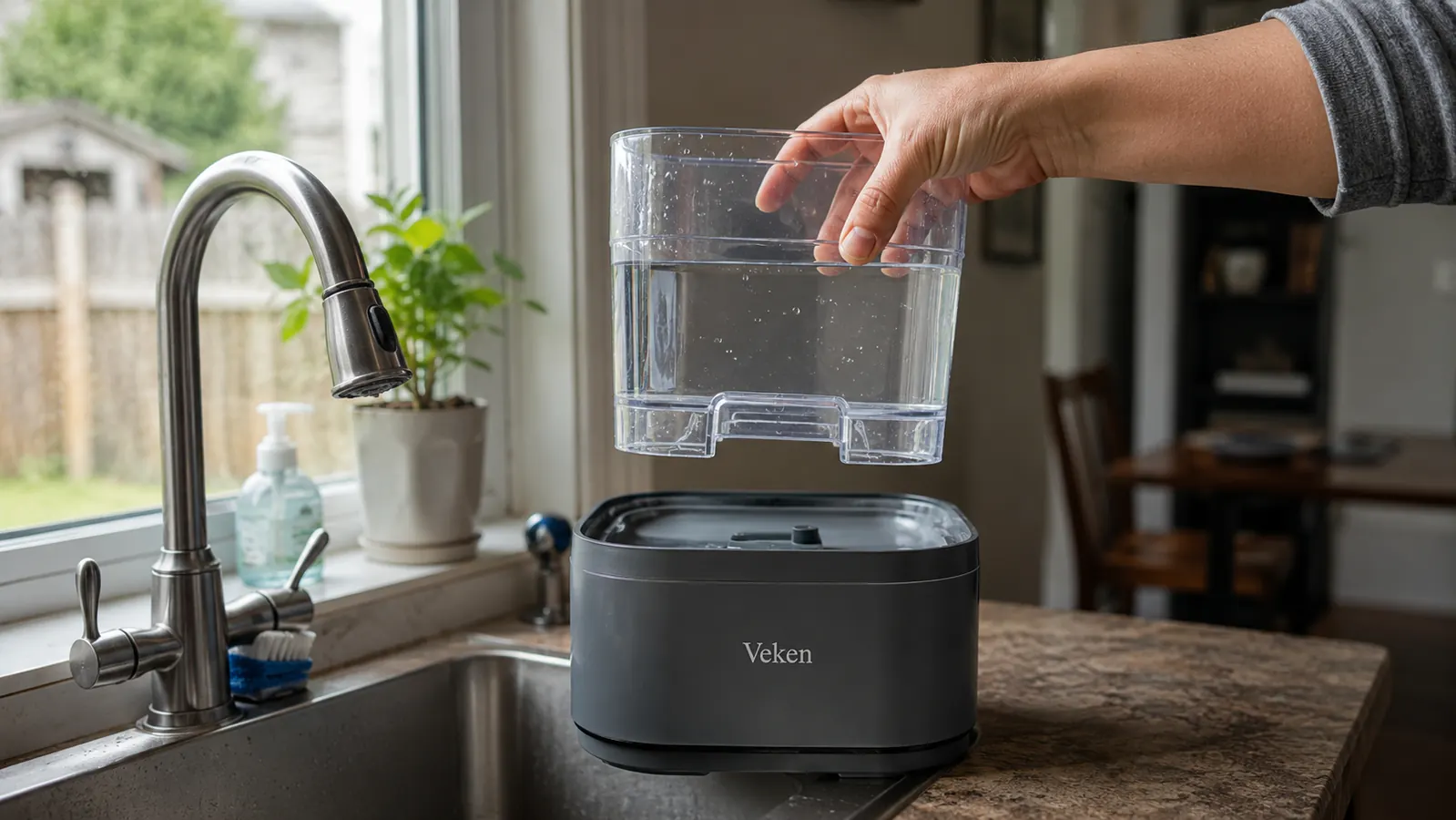
Setup took maybe ten minutes total, most of which was rinsing the parts before the first fill like the instructions suggest. It comes apart into a base with the pump, a foam pre-filter, a carbon filter that sits in a plastic frame, and the clear top reservoir. None of it required tools, and I didn't need to consult the manual again after that first day, which is more than I can say for some of the gadgets I've bought for this house.
I run it on the standard flow setting rather than the lower one, mostly because Pepper seemed to prefer the more active bubbling stream at the top level when I tested both during the first week. My older dog Maple, who's stiffer in the mornings and mostly sticks to her own routine, has never once shown interest in it, which tells you this really is a cat-driven review even though the box markets it for multiple pets.
How the Fountain Actually Works, Day to Day
The pump sits submerged in the base and pushes water up through the carbon filter into the top bowl, where it either flows gently over a raised disc or bubbles up depending on the flow setting, then trickles back down into the reservoir below. The idea, and it's a legitimate one, is that moving water encourages cats to drink more than a still bowl does, since cats in the wild are naturally drawn to running water as a sign it's fresh and less likely to be stagnant. I can't tell you the biology behind that is airtight, but I can tell you it worked on my particular cat.
The reservoir holds close to 95 ounces, which in practice meant I wasn't refilling it daily even with Pepper drinking from it multiple times a day and the occasional dog detour. During the hottest stretch of summer I topped it off every day, but for most of the six months every other day was plenty, which fit my schedule a lot better than the old bowl-and-jug system I'd been doing before.
One thing that surprised me was how quiet it actually is once it's running normally. The first day it was noticeably audible from the living room, mostly air working its way out of the pump, but by day two that settled into a soft, steady trickle I genuinely stopped noticing within about a week. It's the kind of sound that fades into the background the way a refrigerator hum does, unless something's actually wrong with the pump, which I'll get into.
Six Months of Pump Noise, Cleaning, and Descaling
Here's the part I think most reviews gloss over: the noise level is directly tied to how clean you keep it, not a fixed feature of the product. For the first month or so, it stayed whisper-quiet the whole time. Around week six, I started noticing a faint rattling sound that wasn't there before, and when I pulled the pump apart, there was a visible buildup of mineral scale and a little bit of cat hair wound around the impeller. A quick rinse and a soft toothbrush scrub fixed it completely, and the noise dropped right back down.
That became the pattern for the rest of the six months. Roughly every two to three weeks I do a full teardown: pump, foam pre-filter, carbon filter housing, and reservoir all get rinsed, and about once a month I do a deeper clean with a vinegar-and-water soak on the base and pump housing to knock out mineral scale, since our tap water here isn't especially soft. Skipping that step for even an extra week or two is noticeable, both in the sound and in how sluggish the water flow gets at the top.
I won't pretend this is zero maintenance, because it isn't, and if you're the kind of pet owner who wants to set something up once and forget about it entirely, this product will eventually punish you for that with a noisier pump and a slower flow. For me, folding it into my Sunday routine alongside cleaning the litter box has made it painless, but it is genuinely a recurring chore, not a one-time setup.
Filter Replacement Cost and What Actually Wore Out
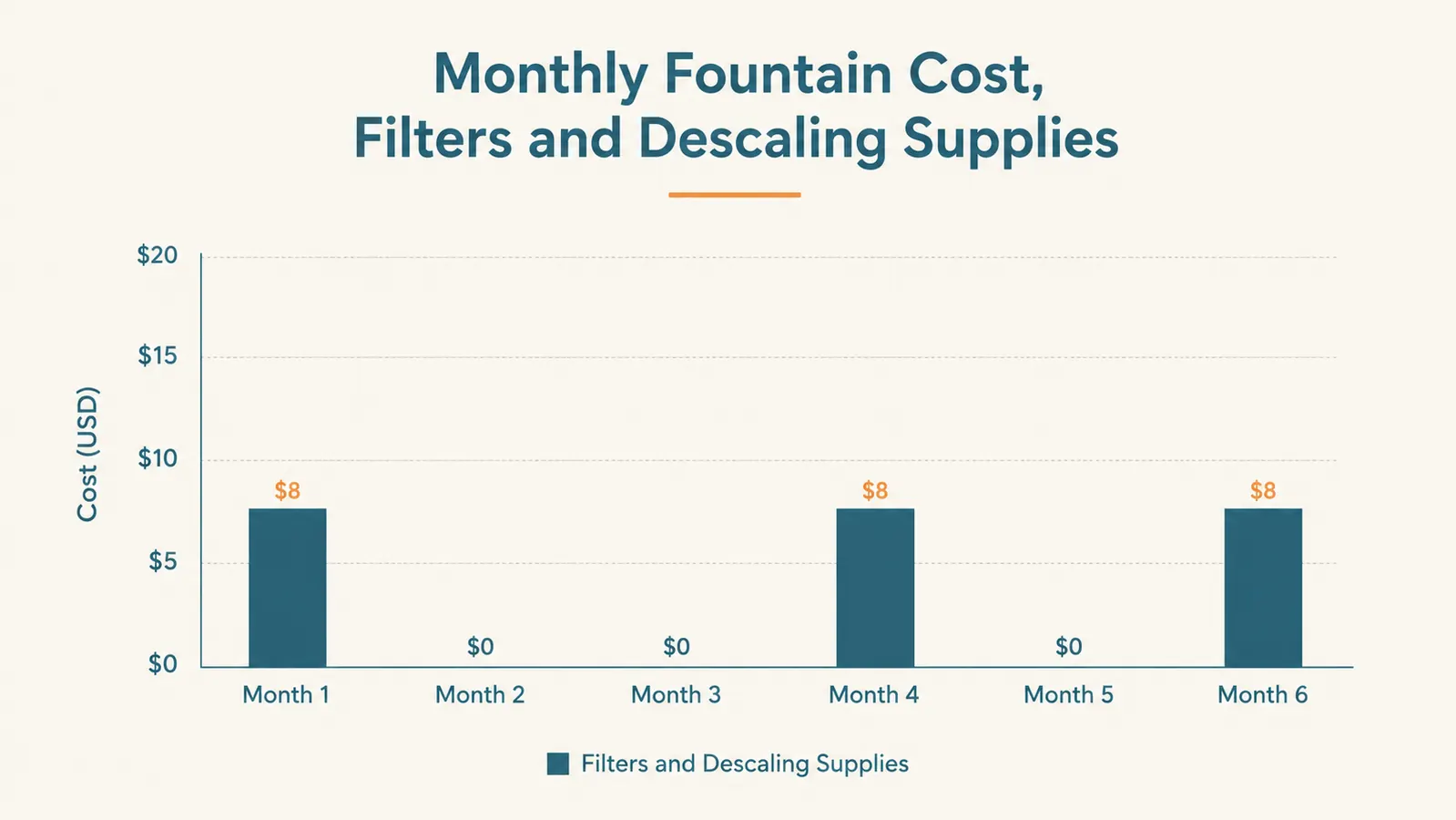
The carbon filters are the real ongoing cost here. Veken's own guidance is to replace them roughly every two to four weeks, and I landed closer to every four weeks with regular cleaning in between, which stretched things out a bit compared to the conservative end of their recommendation. Replacement filters come in multi-packs, so I buy in bulk a couple of times a year rather than reordering constantly, and I've treated it the same way I treat flea prevention or cat litter, as a normal recurring line item rather than a surprise expense.
The foam pre-filter wears out slower than the carbon filter but does eventually flatten and lose its shape, and I replaced mine once around month four when it started looking visibly matted no matter how much I rinsed it. The pump itself is still the original one six months in and hasn't shown any signs of slowing down or overheating, which is honestly the part I was most worried about given how many fountain reviews I read beforehand complaining about pumps dying within a few months.
The one physical piece that's shown real wear is the plastic clip that holds the carbon filter frame in place. It's gotten slightly looser over repeated removal and reinsertion during cleanings, and while it still holds the filter fine, I could see it eventually needing a replacement part if I keep this exact unit running for a full year or longer. It's a small plastic component doing a repetitive job, so some wear there isn't shocking, but it's worth knowing about going in.
Does Pepper Actually Drink More Water?
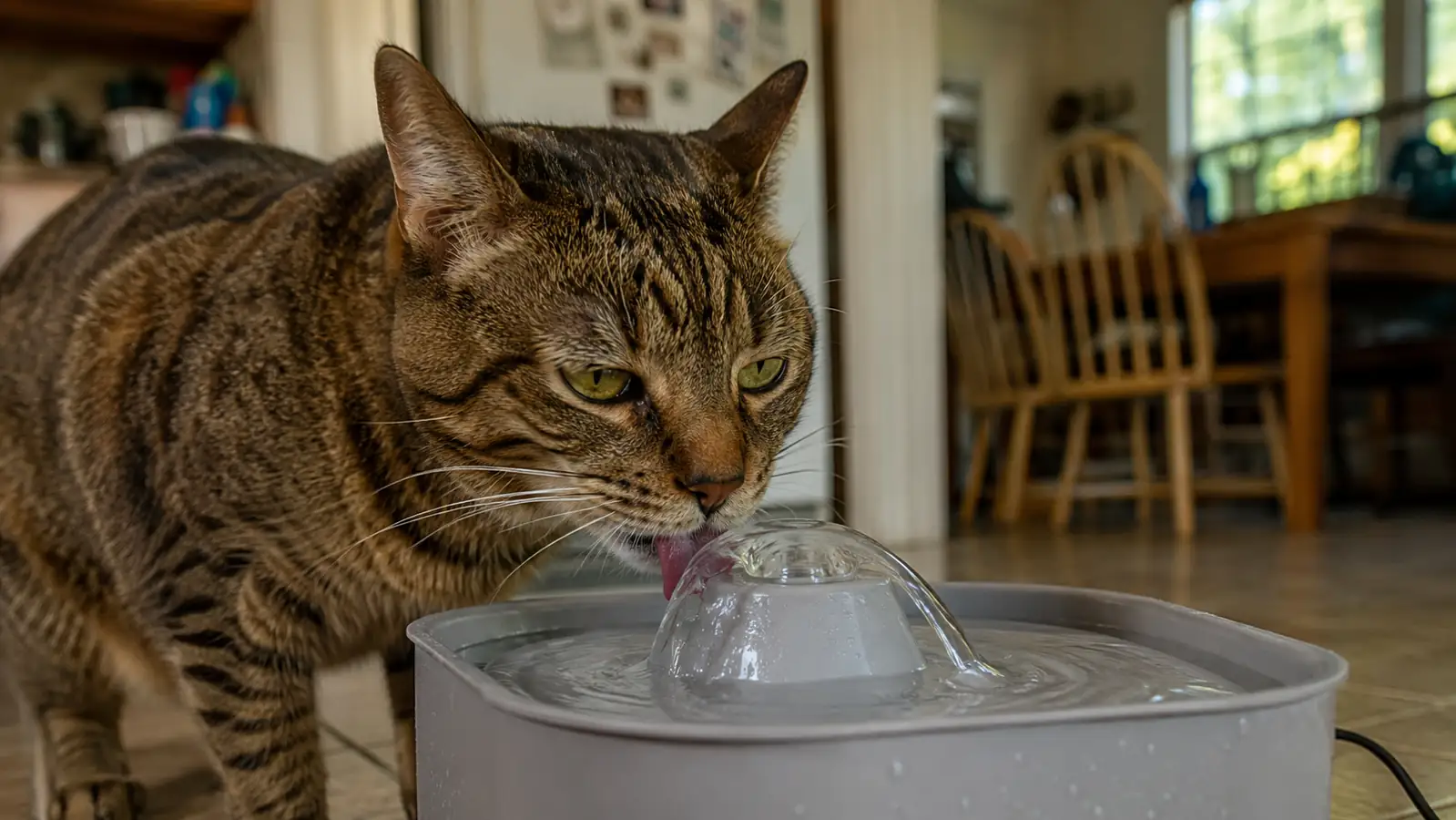
This was the whole reason I bought it, so I tracked it as best I could without anything fancier than watching her habits and noting how often I refilled the reservoir compared to how fast her old still bowl used to empty. In the first two weeks, Pepper was cautious, sniffing at the moving water and drinking from it in short bursts rather than committing right away, which matches what I've read about cats needing an adjustment period with any new fountain. By week three she was a regular at it, and I stopped seeing her hover near the bathroom sink asking to be let in, which had been a near-daily occurrence before.
I can't give you a precise ounces-per-day number, because I'm not measuring her intake with a syringe, but the practical, visible sign for me was that the reservoir needed refilling noticeably faster than her old bowl ever emptied, and her litter box output looked more consistently hydrated, for lack of a better way to put it. Her most recent vet visit didn't flag anything concerning, and while I'm not crediting the fountain alone for that, it's one more data point that nothing's gotten worse since we made the switch.
I want to be honest that a fountain is not a treatment for an existing urinary or kidney issue, and if your cat has already been diagnosed with something in that territory, this is a supportive habit change to bring up with your vet, not a fix on its own. If you're noticing straining, blood in the litter box, or a sudden drop in appetite, that's a vet visit first, fountain second, every time.
What I Liked
- Genuinely quiet once cleaned regularly, fades into background noise
- 95oz reservoir means refilling every 1-2 days instead of daily
- Pump held up fine for six full months with no overheating or failure
- Visible increase in how often Pepper drinks compared to her old bowl
- Filters and parts are widely available and easy to buy in bulk
Where It Falls Short
- Requires a real cleaning routine every 2-3 weeks or noise and flow suffer
- Carbon filters are a recurring cost, roughly monthly with regular cleaning
- Some cats need a two to three week adjustment period before using it
- The plastic filter clip shows some wear after months of repeated cleaning
- Not a substitute for a vet visit if your cat has diagnosed urinary issues
By week three, Pepper stopped hovering near the bathroom sink asking to be let in. That was the moment I knew the fountain had actually changed her habit, not just her bowl.
Who This Is For
This is a solid fit for cat owners whose cat is a picky or reluctant water drinker, especially if you've noticed the faucet-chasing behavior Pepper used to do. It's also a reasonable pick if you work full-time and want something that doesn't need daily babysitting, as long as you're willing to actually do the every-few-weeks cleaning instead of letting it run untouched for months. Multi-pet households can use it too, though in my experience it stayed mostly a cat-driven fixture even with two dogs in the house.
Who Should Skip It
If you're not willing to commit to regular cleaning, this isn't the product for you, since the mineral buildup and pump noise get worse fast without it, and you'll end up disappointed within a couple of months. I'd also skip it, at least as a first step, if your cat already has a diagnosed urinary or kidney condition and hasn't been to the vet recently, since that conversation should come before any product purchase. And if your household water is very hard, budget for more frequent descaling than I described here, since our tap water is only moderately hard and I still needed monthly attention.
Six months in, this is still running every day in my kitchen
If your cat is skipping the water bowl the way Pepper used to, it might be worth a look. Check today's price on Amazon and see current availability.
Amazon Check Today's Price on Amazon →