

Short answer, if you don't want to read the whole thing: for a dog who already has stiff, achy joints, like my senior Beagle Maple, I'd spend the extra money on Cosequin. For a younger, healthy dog you're just trying to support before problems start, plain glucosamine HCl is a reasonable, cheaper starting point. I've fed both to my own dogs at different points, and the difference isn't night and day, but it's real enough that I want to walk you through exactly what you're paying for.
Maple is an eleven-year-old Beagle who's been part of our house since she was two. For the last couple of years she's been noticeably slower getting up in the morning, especially on cold days, and she used to hesitate at the bottom porch step before committing to it. My other dog, Biscuit, a Lab mix who will eat literally anything, has no joint issues yet, but I've thought about starting him on something preventive since Labs are prone to hip and elbow problems as they age. That's the exact split a lot of pet owners are trying to figure out: do you need the full glucosamine-chondroitin-MSM combo, or is plain glucosamine HCl enough.
What Each Ingredient Is Actually Doing
Before we get into which product to buy, it helps to know what you're comparing. Glucosamine hydrochloride is a building block your dog's body already uses to help make and repair cartilage, the cushioning tissue inside joints. That's the piece both products share, and it's the reason even the cheapest glucosamine capsule isn't nothing. Chondroitin sulfate is a different compound that's thought to work alongside glucosamine, helping cartilage hold onto water and stay more resilient, and it's the ingredient that separates a combo formula like Cosequin from a bare-bones glucosamine product. MSM, short for methylsulfonylmethane, is a sulfur compound that's often included for general comfort support rather than cartilage building itself.
None of these ingredients are a cure, and I want to be upfront about that. I'm not a vet, and I'm not going to tell you a chewable tablet reverses arthritis or replaces a real diagnosis. What I can tell you is what I watched happen in my own house, and what the label differences actually mean for your wallet and your dog's day-to-day comfort. If your dog has a diagnosed joint condition or is on other medication, it's worth running any supplement by your vet first, since they know your dog's specific history in a way a blog post never can.
One thing I didn't appreciate until I started comparing labels side by side is how much the fine print varies between plain glucosamine products. Some list glucosamine sulfate instead of glucosamine hydrochloride, some don't disclose the actual milligram amount per serving clearly, and some are made by companies with no other pet supplement history at all. Cosequin's label is specific down to the milligram for every active ingredient, which made it a lot easier for me to compare doses across different sizes and formulas without guessing.
| Cosequin (Glucosamine + Chondroitin + MSM) | Plain Glucosamine HCl | |
|---|---|---|
| Active Ingredients | Glucosamine hydrochloride, chondroitin sulfate, and MSM in one chewable | Glucosamine hydrochloride only, nothing else added |
| Backed by Named Research | Built around patented FCHG49 glucosamine and TRH122 chondroitin, studied specifically in dogs | Varies by brand, most generic products have no dedicated studies behind that exact formula |
| Manufacturing Quality Control | Nutramax runs its own quality testing and consistency checks batch to batch | Quality control varies a lot depending on which company made it |
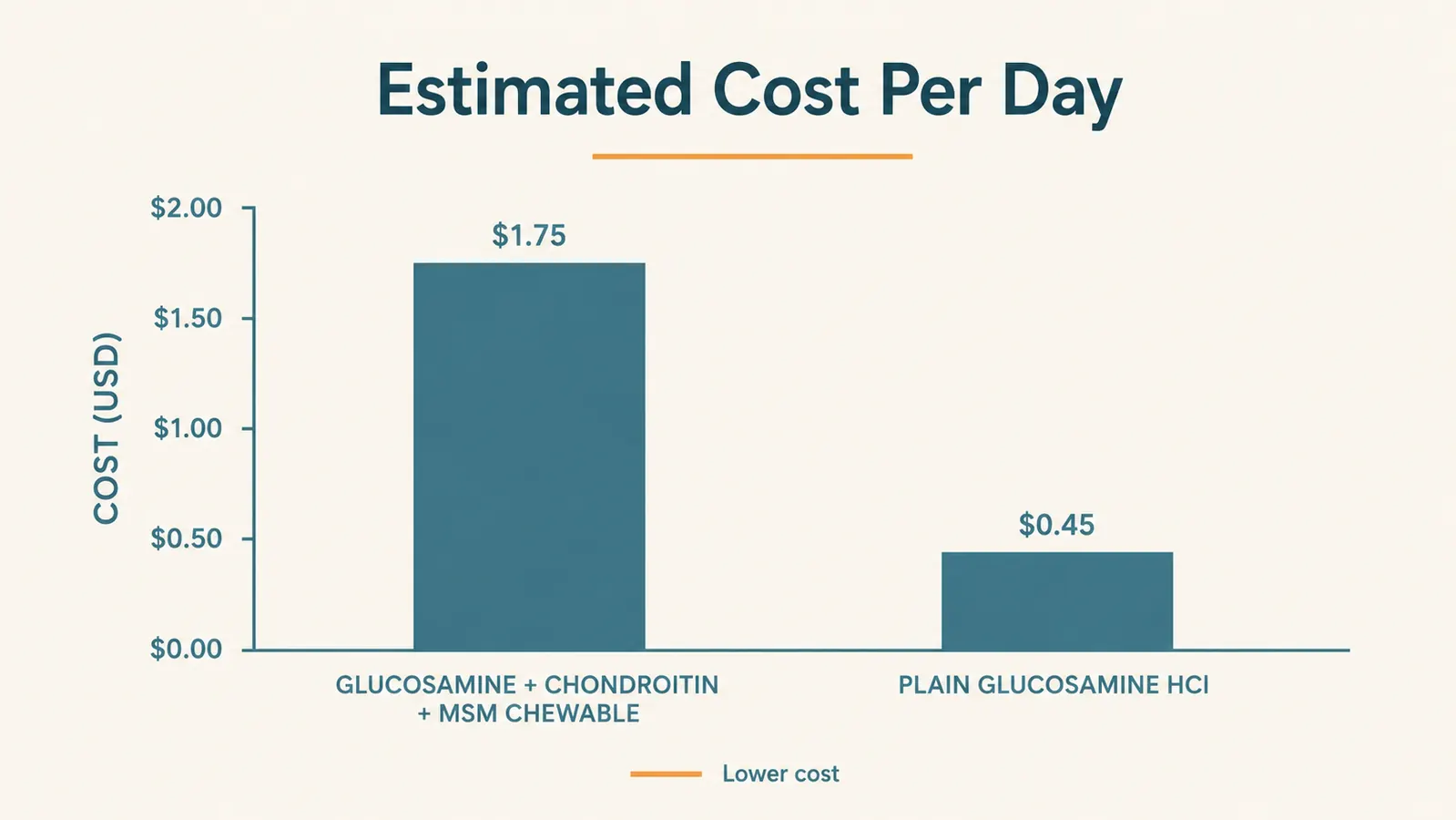
| Estimated Cost Per Day (average dog) | Roughly 45 to 60 cents a day at the recommended dose | Often 10 to 20 cents a day for a comparable dose |
| Palatability / Ease of Giving | Flavored chewable tablets most dogs, including Maple, take like a treat | Often plain capsules or unflavored tablets, hit or miss whether a picky dog will eat them |
| Best Suited For | Dogs with diagnosed stiffness, arthritis, or recovering from joint-related surgery | Younger, healthy dogs looking for basic preventive support on a tight budget |
| How Often Vets Bring It Up By Name | Frequently mentioned by name in vet offices as a go-to joint chew | Rarely recommended as a specific brand, more of a general ingredient suggestion |
| Formulation Options Available | Regular strength, Maximum Strength/DS, soft chews, and sprinkle capsules | Usually just one basic tablet or capsule size |
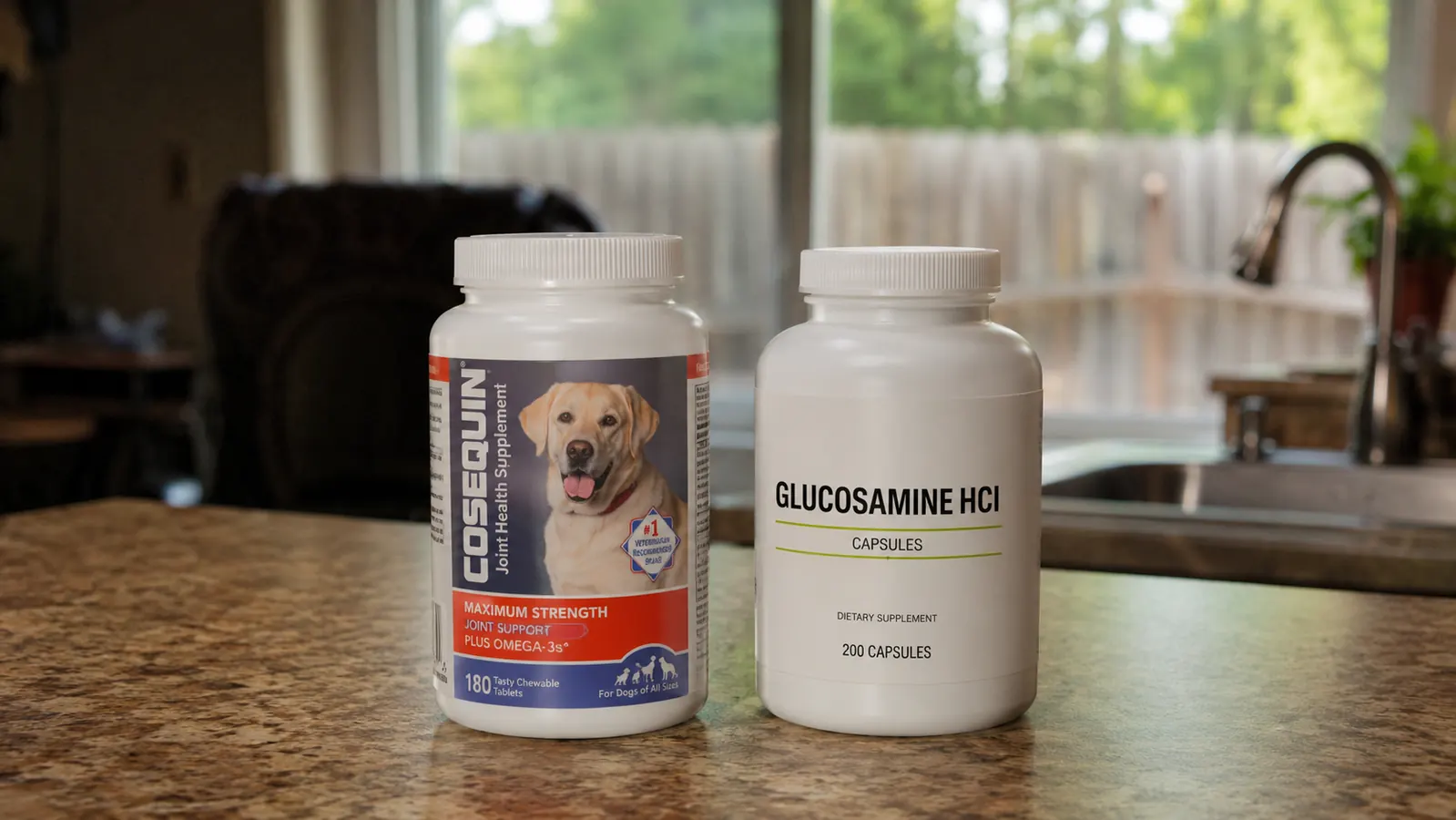
Where Cosequin Wins
The biggest thing Cosequin has going for it is that it's not just glucosamine. Chondroitin sulfate and glucosamine are usually talked about as a pair for a reason, they're thought to support cartilage in different but complementary ways, and Cosequin adds MSM on top of that combination. When I started Maple on Cosequin instead of the plain glucosamine capsules we'd tried first, within about six to eight weeks I noticed she was taking that porch step without the little pause she used to do. I'm not going to tell you it's a miracle or that she's suddenly a puppy again, she's still a eleven-year-old dog, but the hesitation at the bottom of the steps mostly went away, and her morning stiffness seemed less pronounced.
The other real advantage is consistency. When you buy a joint supplement that only lists glucosamine HCl on the label, you genuinely don't know how it was sourced or tested unless you dig into the specific brand. Nutramax, the company behind Cosequin, has been making veterinary supplements for decades and puts its formulas through its own quality testing program. That doesn't mean it's magic, but it does mean the tablet in the bag is more likely to match what's printed on the label, batch after batch. For something my dog eats every single day for months or years, that consistency matters more to me than saving a few dollars a month.
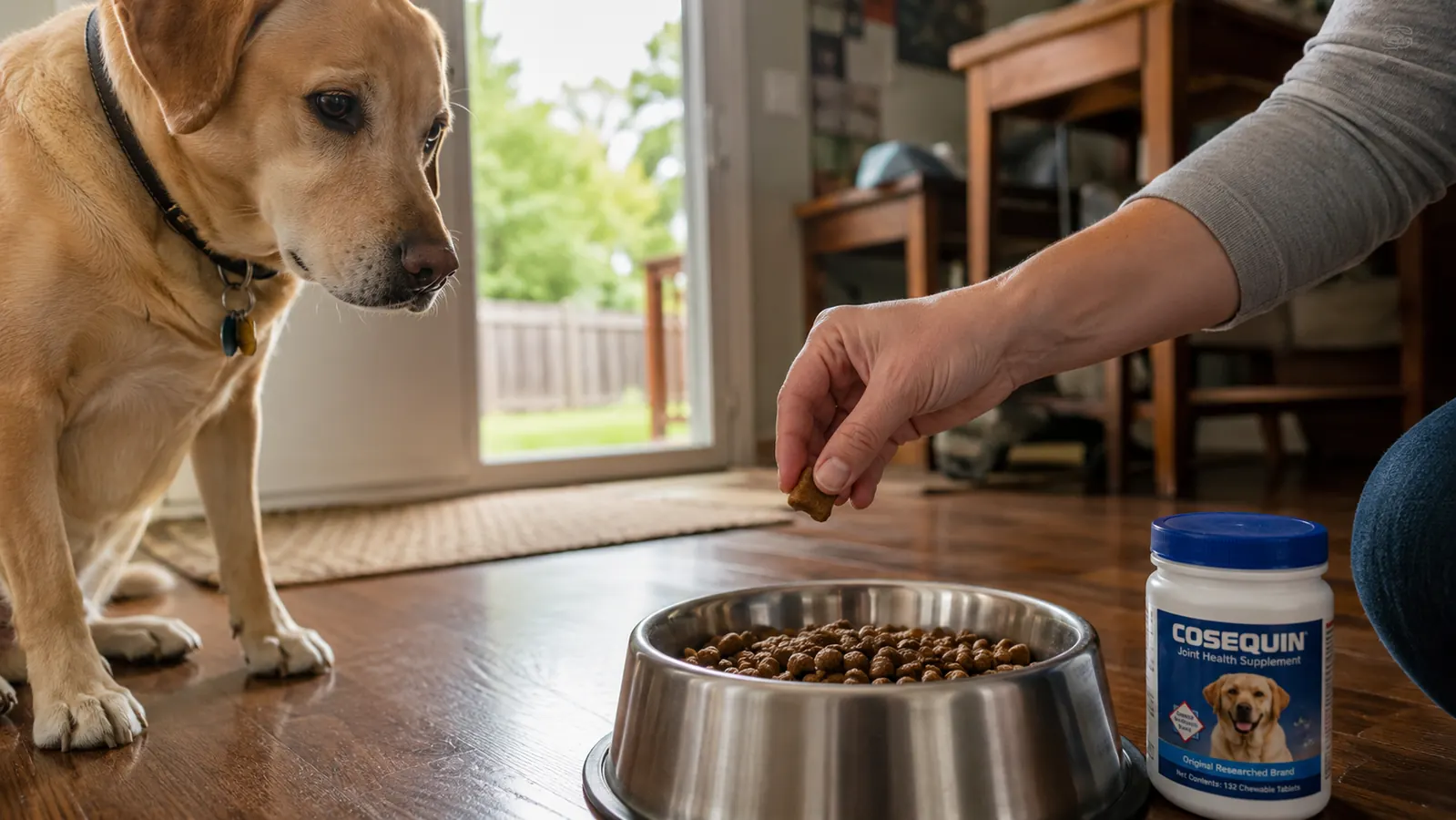
There's also a practical, boring reason Cosequin has stayed on our shopping list, Maple actually eats it without a fight. Before I switched her over, I tried a plain glucosamine capsule that I had to hide inside a piece of cheese every single morning, and half the time she'd nose the cheese apart and leave the capsule sitting in her bowl. The Cosequin chewables are flavored enough that she treats them like a little treat before breakfast, which sounds minor until you've spent a month wrestling a capsule into a dog who's onto your tricks.
Where Plain Glucosamine HCl Wins
I don't want to pretend plain glucosamine HCl is a scam, because it isn't. Glucosamine is the ingredient doing a lot of the heavy lifting in both products, and if your dog is young, active, and not showing any signs of stiffness yet, a basic glucosamine HCl supplement is a low-cost way to add a little joint support to their routine without spending Cosequin money every month. This is closer to where I'd start with Biscuit if I decided to put him on something preventive now, since he's not showing any symptoms and I'd rather not overspend on a combo formula he may not need yet.
Price is the other honest advantage. Plain glucosamine HCl products are frequently half the cost per day or less compared to a combo chew like Cosequin. If you've got multiple dogs, or you're just trying to stretch a household budget while still doing something for your pet's joints, that price gap adds up over a year. It's a fair tradeoff as long as you understand you're getting a narrower formula, not a lesser version of the same thing.
I'll also say this, if your dog tolerates a plain glucosamine capsule fine and you're not seeing any stiffness, there's no urgent reason to switch just because a combo product exists. Supplementing before there's a problem is a personal choice, not a requirement, and plenty of dogs live full, comfortable lives without ever touching a joint chew. Where I'd push back is on assuming that once real symptoms show up, the cheap option is doing the same job as the fuller formula, because in my experience with Maple, it wasn't.
If your dog is already stiff in the mornings, don't guess with a single-ingredient supplement
Cosequin's combo of glucosamine, chondroitin, and MSM is the formula I actually reach for once a dog is showing real signs of joint discomfort, not just as a maybe-it-helps preventive. Check today's price and see the current chewable options on Amazon.
Amazon Check Today's Price on Amazon →Plain glucosamine HCl isn't a bad choice, it's just a narrower one. Cosequin is the version I trust once a dog actually has a problem to solve.
Who Should Buy Which
If your dog is like Maple, older, visibly stiff getting up, hesitating on stairs or slow to settle into a comfortable position, I'd go with Cosequin or another glucosamine-chondroitin-MSM combo over plain glucosamine HCl. The extra ingredients and the research behind the specific formula are worth the higher cost per day when there's an actual problem you're trying to manage, and I'd rather not find out six months later that I under-supported a real issue to save fifteen dollars a month. It's also worth asking your vet before starting any supplement, especially if your dog is already on other medications or has a diagnosed condition, since they can tell you if a specific dose or formula makes sense for your situation.
If your dog is more like Biscuit, young, food-motivated, structurally fine so far, and you just want a modest, budget-friendly head start on joint health, plain glucosamine HCl is a perfectly reasonable place to begin. You can always step up to a fuller combo formula later if you start noticing stiffness or your vet suggests it at a checkup. There's no rule that says you have to buy the most expensive option out of the gate, especially for a dog who doesn't have symptoms yet. What I wouldn't do is assume the cheap capsule and the combo chew are interchangeable once real stiffness shows up, because in my house, the switch to the fuller formula was the thing that actually made a visible difference for Maple.
If you want to run the numbers for your own budget, it works out roughly like this over a year: a combo chew at around fifty cents a day lands somewhere in the neighborhood of one hundred eighty dollars annually, while a plain glucosamine capsule at fifteen cents a day is closer to fifty five dollars a year. That's a real gap, and for a lot of households it's worth stretching for once stiffness actually shows up, but I don't think anyone should feel bad choosing the cheaper option for a healthy dog who's just getting started on preventive support.
One last practical note before you decide, check the actual dosing on whichever product you pick against your dog's weight. A lot of joint supplements are dosed by weight bracket, and giving a small dog a large-breed dose or the reverse won't get you the results either product is designed for. That's true whether you land on Cosequin or a plain glucosamine capsule, so don't skip the label math just because you've picked a brand.
See what six months of the daily chew actually looks like before you decide
I wrote up the full long-term breakdown of using Cosequin with Maple, dosing, cost, and what changed. If you're ready to try the combo formula, check the current price and chewable options here.
Amazon Check Today's Price on Amazon →