
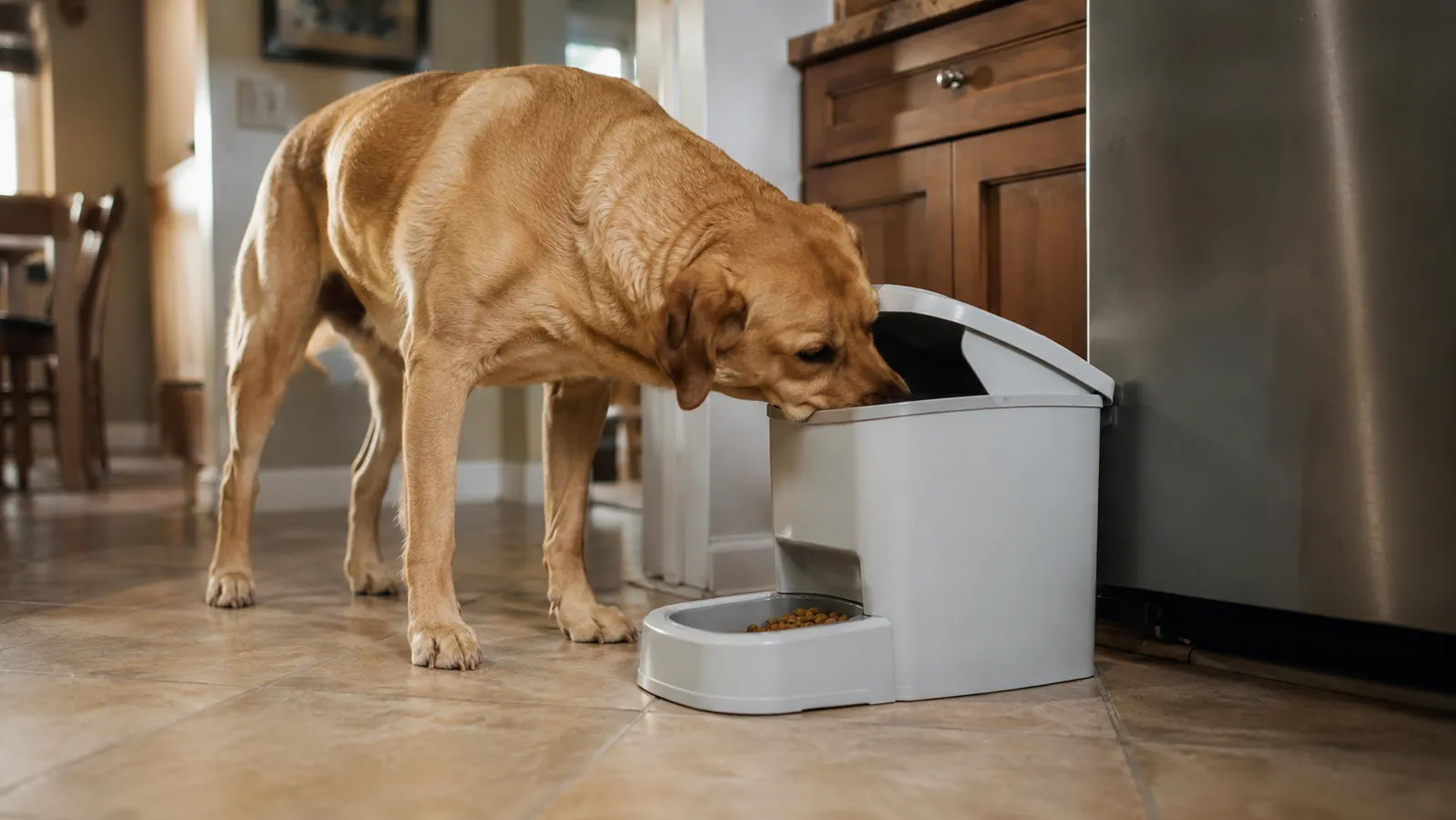
I already wrote the six-month review of the PetSafe automatic feeder, the one where I talk about how it's held up on my kitchen floor and what a normal week with it looks like. This isn't that article. This is the one where I tell you the stuff that only shows up after you've lived with the thing for a while, the parts that don't make it into a five-star Amazon review because the person writing it hasn't had the feeder long enough to hit them yet.
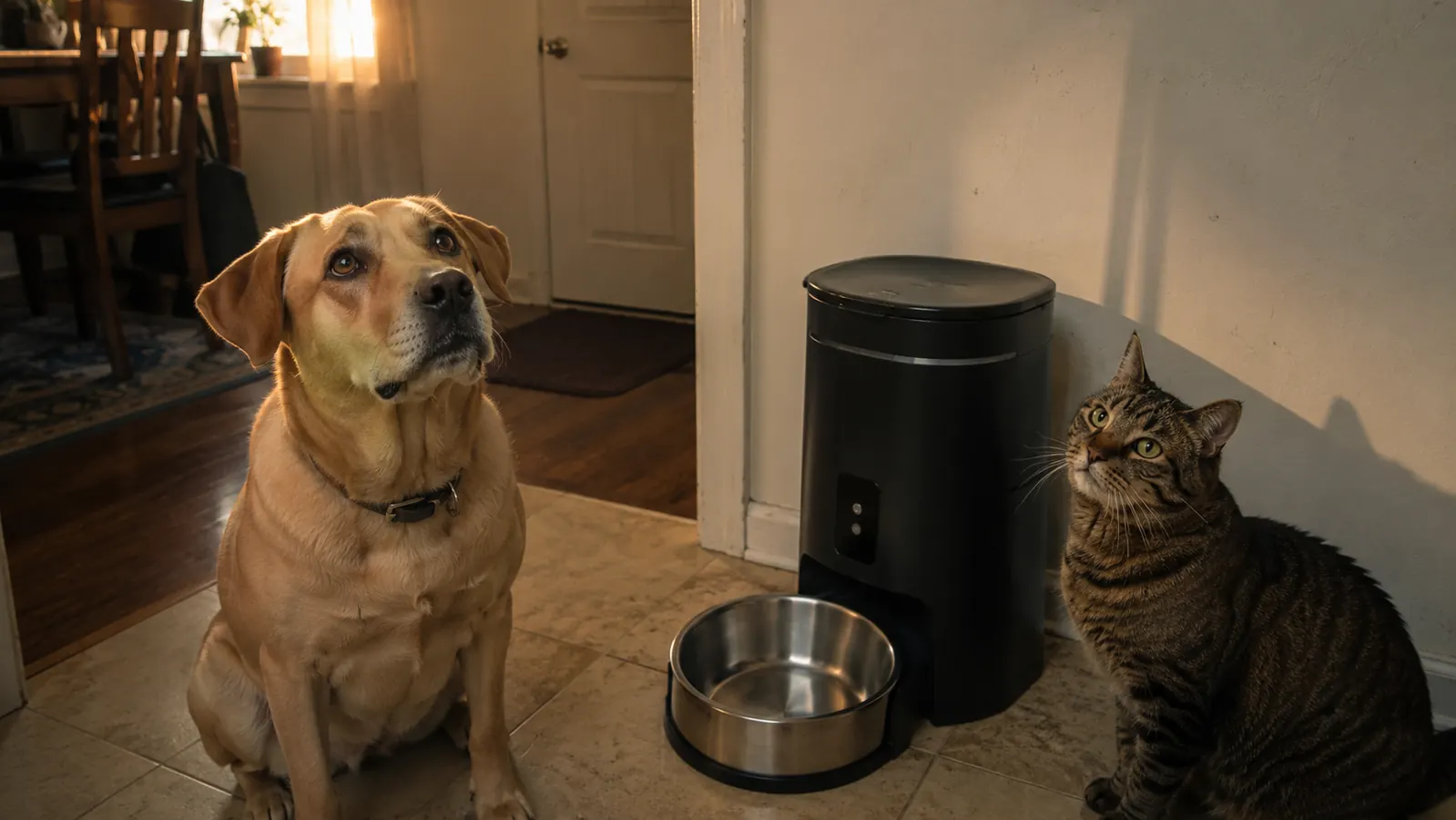
My dog Biscuit is a Lab mix who has never once looked at a closed container and assumed it was off-limits. He's the reason I bought the PetSafe in the first place, and he's also the reason I can tell you, with total confidence, exactly where it falls short. If you're picturing a magic box that solves feeding forever and you can just walk away for the day, I want to slow you down before you spend the money on that assumption. The PetSafe is a good feeder. It is not that.
None of what follows means I regret buying it. It means I went in with expectations shaped by the packaging and the glowing reviews, and reality adjusted those expectations pretty quickly. If you read this before you buy instead of after, you'll skip a few headaches I didn't, and you'll know exactly what to test before you ever trust it unsupervised.
The Quick Verdict
Works fine on a predictable schedule with small, easy kibble. Everything else, portion accuracy, battery reliability, a determined dog, catches people off guard.
Amazon Check Today's Price →Read this before you buy, not after you've already been burned.
The PetSafe feeder is genuinely useful for the right setup. Knowing its limits up front means you won't be surprised by them at 7am on a workday.
Amazon Check Today's Price on Amazon →What I Wish Someone Told Me Before I Bought It
Nobody sat me down and explained that a compartment marked as one cup is really a suggestion, not a promise. Nobody mentioned that a dying battery might not announce itself. And nobody warned me that a food-motivated dog treats a locked lid as a personal insult rather than a boundary. I found all of this out the way most people do, by living with it, one small surprise at a time, over the course of several months.
None of this means the feeder is bad. It means the marketing photo of a calm dog waiting patiently by a perfectly dispensed bowl leaves out the parts that actually matter once the box is unpacked and the thing is running on your own counter, with your own dog, your own kibble, and your own unpredictable schedule.
I'm writing this the way I'd talk to a friend who's about to buy the same thing, not the way a manufacturer would write it. If something about this unit bugged me enough to still remember it months later, it's in here. If it didn't matter, I left it out and moved on to the next thing.
The Portions Are a Guess, Not a Measurement
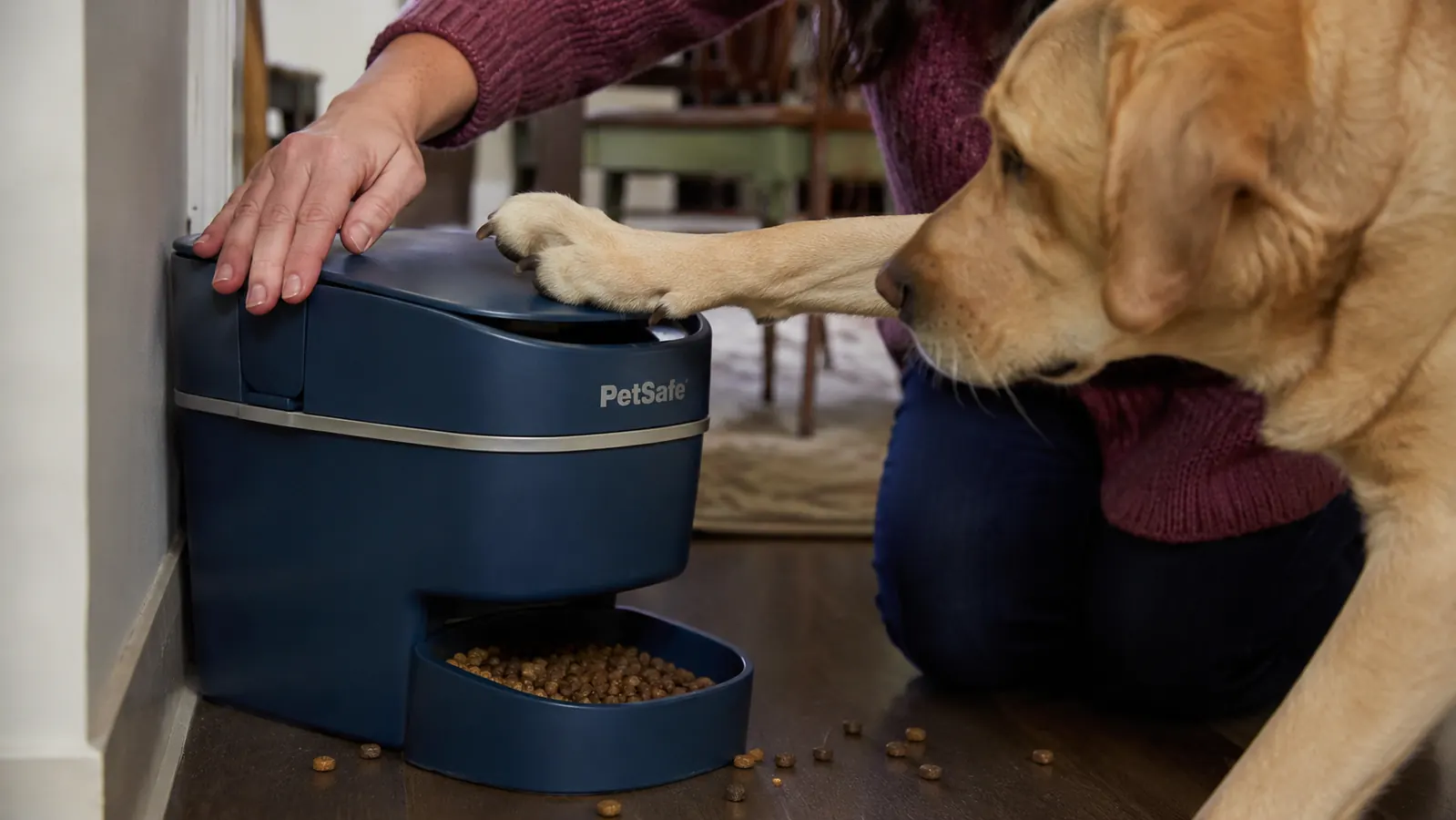
Each compartment is labeled to hold one cup, and I trusted that number completely for the first stretch of ownership. Then I started weighing what actually landed in the bowl, out of curiosity more than suspicion, and the numbers didn't line up as cleanly as I expected. Some days I got a full cup. Some days I got noticeably less, and it wasn't tied to anything obvious like a different kibble bag or a different setting on the dial.
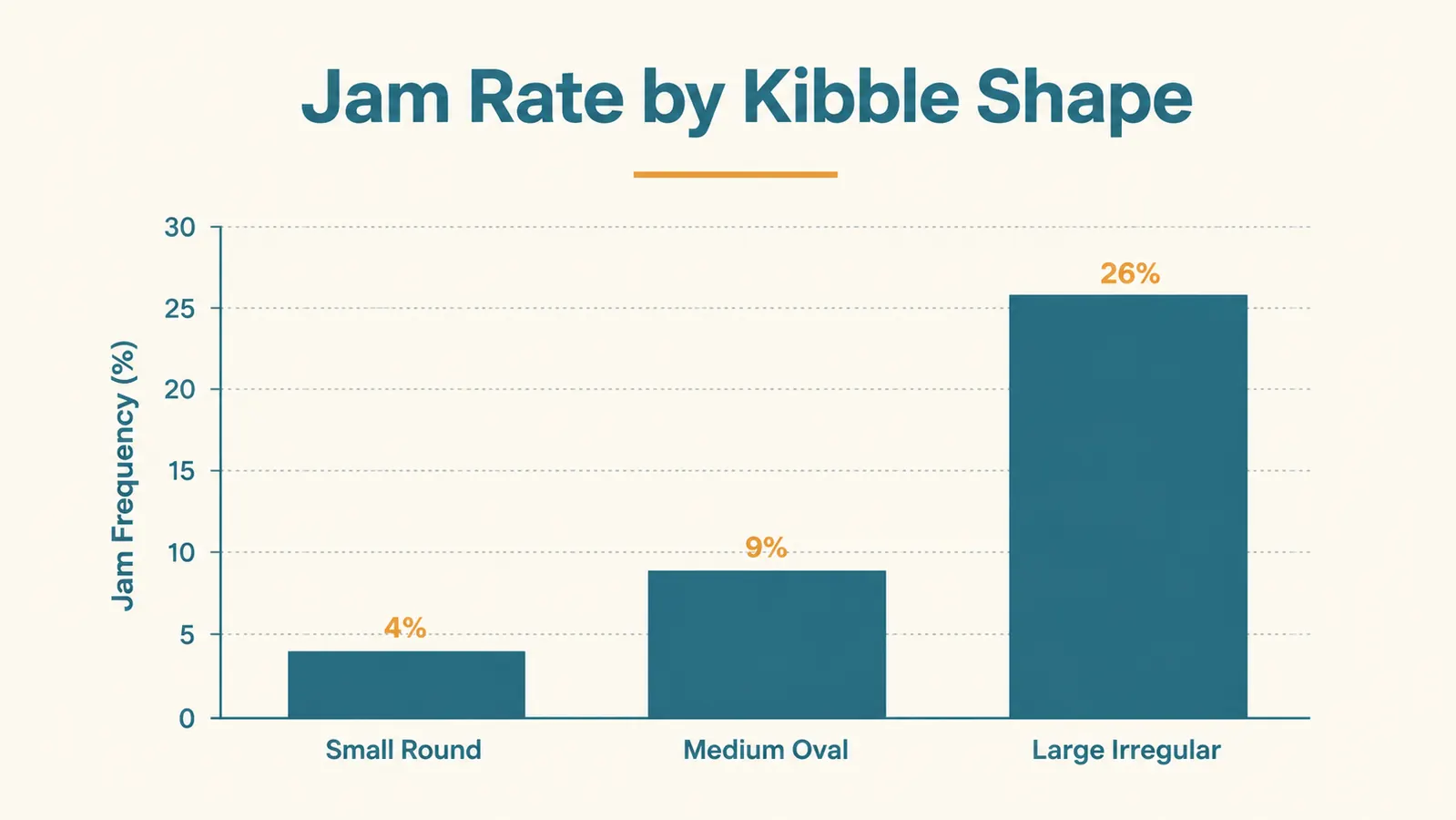
The mechanism scoops from a rotating tray, and how much lands in the bowl depends on how the kibble happens to settle in that particular compartment at that particular moment. Fine, round pieces pack differently than flatter or larger ones, and the auger doesn't always clear a compartment fully on the first pass. It's not a scale. It's closer to a scoop that mostly gets it right, most of the time, and occasionally misses by more than you'd expect.
For a dog who's a little food-motivated and not on a tight calorie budget, this is a shrug, and honestly a little bit of a favor, since Biscuit could stand to lose a pound or two anyway. For a dog on a vet-prescribed weight-loss plan or a therapeutic diet where every ounce is counted, I would not trust this feeder to hit that number reliably without you periodically checking the actual bowl weight yourself with a kitchen scale.
Treat the one-cup label as a starting point, not a guarantee. If your dog's vet has given you a specific number of calories or grams per meal, weigh a week's worth of dispensed portions before you assume the feeder is doing the math correctly on its own, because it isn't measuring, it's just scooping.
The Silent Battery Failure
This is the one that actually scared me a little. The unit runs on D batteries, and it has a low-battery indicator, which sounds reassuring right up until you realize how easy that little light is to miss if the feeder isn't sitting somewhere you look at directly every day. Mine is tucked near the laundry room, out of Biscuit's constant reach, which also means it's out of my constant eyeline most mornings when I'm rushing.
A scheduled meal simply didn't happen one morning. No alarm, no beeping, no dramatic failure. The compartment just didn't turn. I only figured out why when I checked the unit later that day and noticed the indicator light was dim instead of off, which I'd been reading as normal because I'd never actually paid attention to what dim versus dark looked like on that particular model until it mattered.
If you're the kind of person who checks on things constantly, this is a minor inconvenience. If you're relying on this feeder to genuinely cover a meal while you're gone for the day with no way to verify it happened, a silent failure is a real risk, especially for a dog with a health condition where a missed dose or missed meal actually matters to their treatment plan.
I now check batteries on a set date every month regardless of whether the light says I need to, and I keep a spare set in the kitchen drawer specifically for this feeder. It's a small habit, but it's the only thing that's kept the silent failure from happening a second time in our house.
Biscuit Found the One Weak Spot
The lid is held down by a latch, not a lock, and it took Biscuit about three weeks to figure out that a determined nose under the front edge could pop it open. He didn't get into the reserve hopper often, maybe four or five times total, but each time it happened, it happened while I wasn't in the room, which is exactly the scenario this feeder is supposed to cover for me in the first place.
The fix wasn't complicated. A heavy rubber band looped around the lid and the base holds it shut against anything short of active chewing, and it hasn't budged since I added it. But I shouldn't have needed to improvise that fix myself, and I don't think most buyers would think to test whether their dog can pry the thing open until after it's already happened once and made a mess.
If your dog is the type who noses open cabinet doors, unzips backpacks, or has ever figured out a childproof latch on your own kitchen drawers, assume yours will try this too. Test it while you're standing right there watching before you ever trust it to run unsupervised for a full day out of the house.
Forget Wet Food Entirely
This one's straightforward but worth saying plainly since the listing photos can make it look more flexible than it is. This feeder is built for dry kibble moving through a rotating tray and auger. It has no refrigeration, no way to keep wet food from sitting out and spoiling in a warm kitchen, and the mechanism itself isn't designed to move anything with moisture in it through the chute.
If your dog eats canned or fresh food, or even a kibble that's heavily coated in oils and gravy, this specific feeder isn't the tool for that job, full stop. I tried mixing a spoonful of wet food into Biscuit's usual dry kibble once, just to see, and ended up with a gummed-up tray within a week that took real scrubbing to get clean again.
The Cleaning Nobody Mentions in the Five-Star Reviews
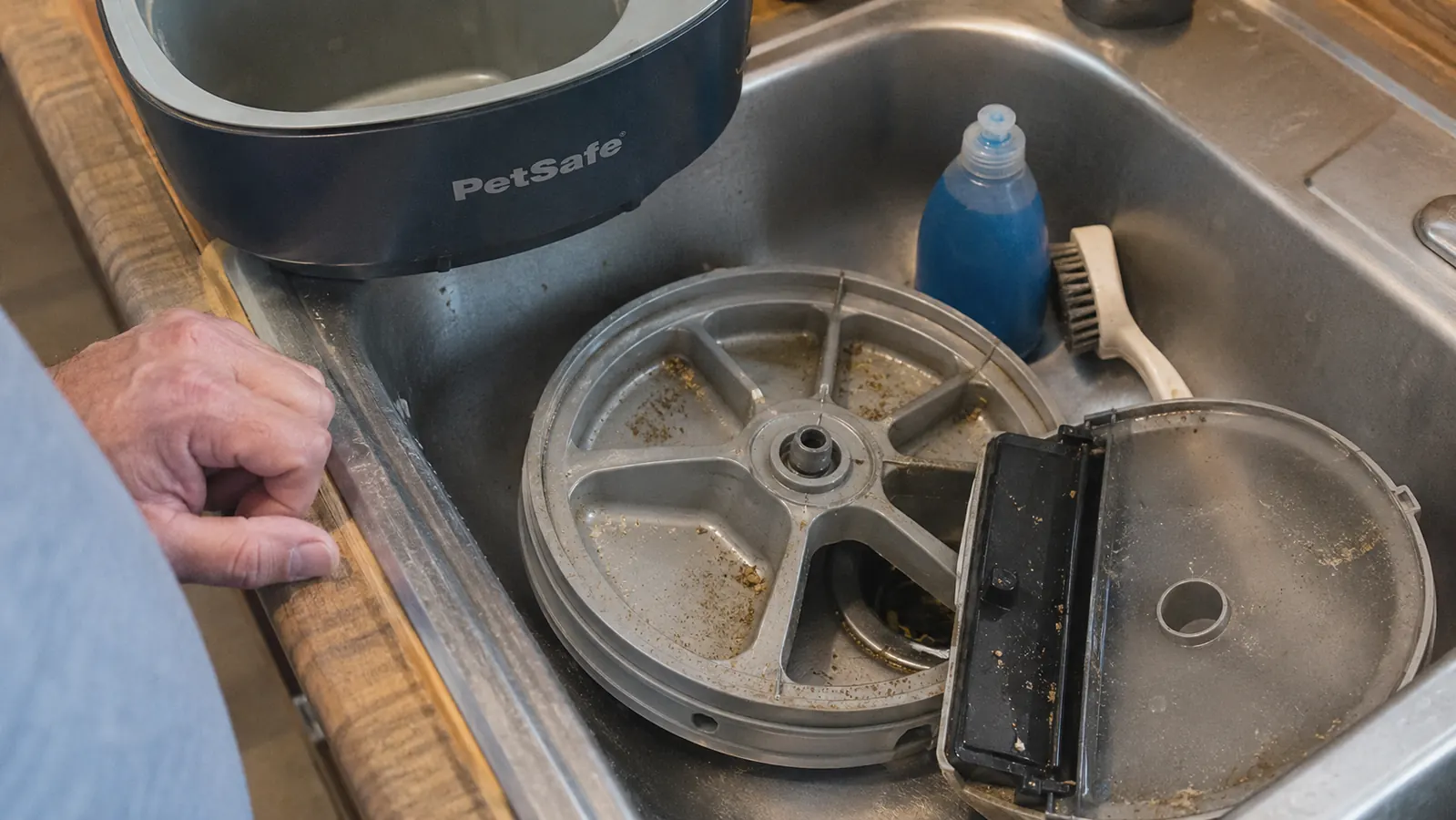
The bowl and tray are dishwasher safe, and that part really is as easy as advertised. What surprised me is what builds up underneath and around the hopper seams over time. Dry kibble sheds a fine dust as it moves through the mechanism, and that dust mixes with a bit of oil from the kibble itself into a light, slightly sticky film along the tray's edges that you can't see from the outside.
It's not visible at a glance, and it doesn't smell bad early on, so it's easy to assume everything under the hood is fine because the parts you can see look fine. I didn't pull the hopper apart for a real cleaning until close to two months in, and when I did, there was more gunk than I expected for something that's just holding dry kibble day after day.
Now it's on my calendar as a monthly chore, not something I wait to notice on my own. It takes maybe ten minutes with a dry brush and a damp cloth, but it's ten minutes the box never told me I'd need, and skipping it for too long is how you end up with a jam.
Why I Still Don't Trust It Fully Unattended
Even after months of mostly reliable use, I don't leave this feeder running a full day's meals without checking in somehow, either by asking someone to peek in or by making sure I'm home for at least one of the scheduled times. Between the portion drift, the battery light I've already missed once, and a dog who's proven he can get the lid open, I've decided the feeder is a tool that helps me, not a replacement for actually paying attention.
That's the mindset I'd want anyone buying this to have going in. It's not a bad appliance. It's a machine, and machines fail quietly sometimes, in ways a living, breathing caretaker would never miss.
I'd rather tell a new buyer that upfront than have them find out the hard way, the same way I did. A feeder like this earns trust slowly, one uneventful week at a time, and it's worth treating it that way instead of assuming day one that it's bulletproof. Give it a few uneventful weeks under real conditions before you fully let your guard down around it.
What I Liked
- Handles a predictable multi-meal schedule without complaint
- Battery power means placement isn't tied to an outlet
- Dishwasher-safe bowl and tray make the visible cleaning easy
- The feed-now button is a genuinely useful backup
Where It Falls Short
- Portion sizes are approximate, not a precise measured cup
- Low-battery indicator can fail silently and skip a meal
- A determined dog can pry the lid open with enough effort
- Not built for wet or fresh food in any form
- Buildup inside the hopper needs a real teardown cleaning, not just the dishwasher
It's not a set-and-forget appliance. It's a tool that needs a trial run with your dog, your kibble, and your own two eyes before you trust it unsupervised.
Who This Is For
If your dog eats small, uniform dry kibble, doesn't treat closed containers as a challenge, and you're using this feeder to cover a predictable gap in your schedule rather than replace supervision entirely, it does the job well enough. It's held up fine for my Beagle Maple, who's slow and stiff in the mornings and has never once tried to break into anything, which tells you a lot about how much of this comes down to the individual dog rather than the machine itself.
Who Should Skip It
Skip it if you have multiple dogs who eat side by side, since a faster or bolder dog can and will finish its own portion and then muscle in on the other dog's compartment the second it opens, which defeats the entire point of scheduled, separate feedings. Skip it too if your dog is on a strict prescription diet where exact calorie counts matter, since the portion drift alone makes this the wrong tool for that job.
And however you use it, please don't treat any automatic feeder as a substitute for actually knowing whether your dog is eating. A dog who suddenly stops eating, or whose appetite changes for more than a day, needs a vet visit, not just a fuller bowl and the assumption everything is fine because the compartment turned on schedule.
Know what you're getting into before it shows up on your counter.
For the right dog and the right setup, this feeder earns its keep. Just go in with eyes open about what it won't do.
Amazon Check Today's Price on Amazon →