
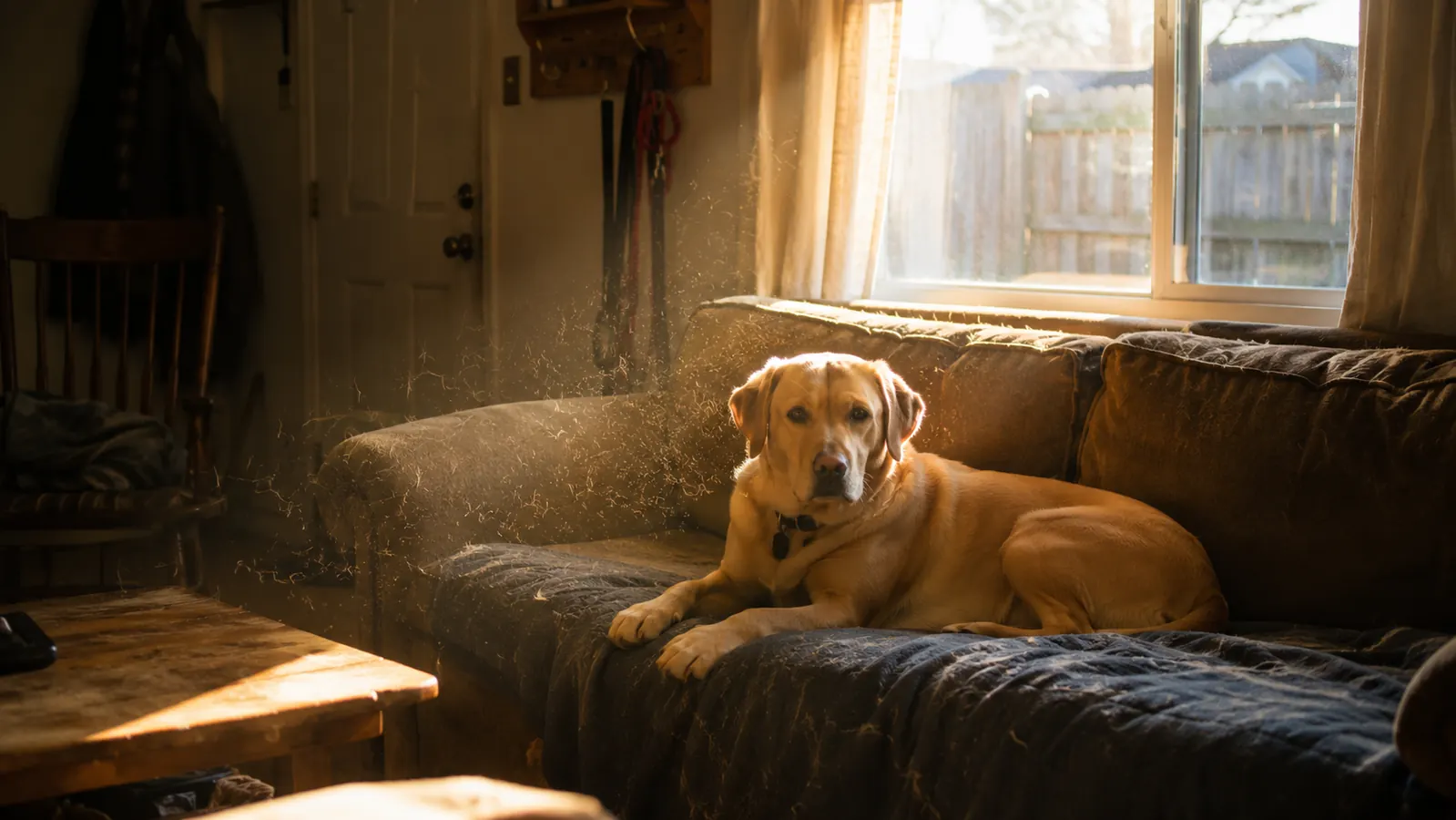
My Lab mix Biscuit sheds like it's his full-time job. For years I dealt with it the way I think most people do: I vacuumed more, I bought a lint roller for every room, and I mostly just accepted that our couch, my work pants, and half the silverware drawer were going to have a light coating of tan fur on them at all times. It wasn't until I actually built a real brushing routine, with the right tool and the right technique, that the fur-everywhere problem stopped being a daily fight.
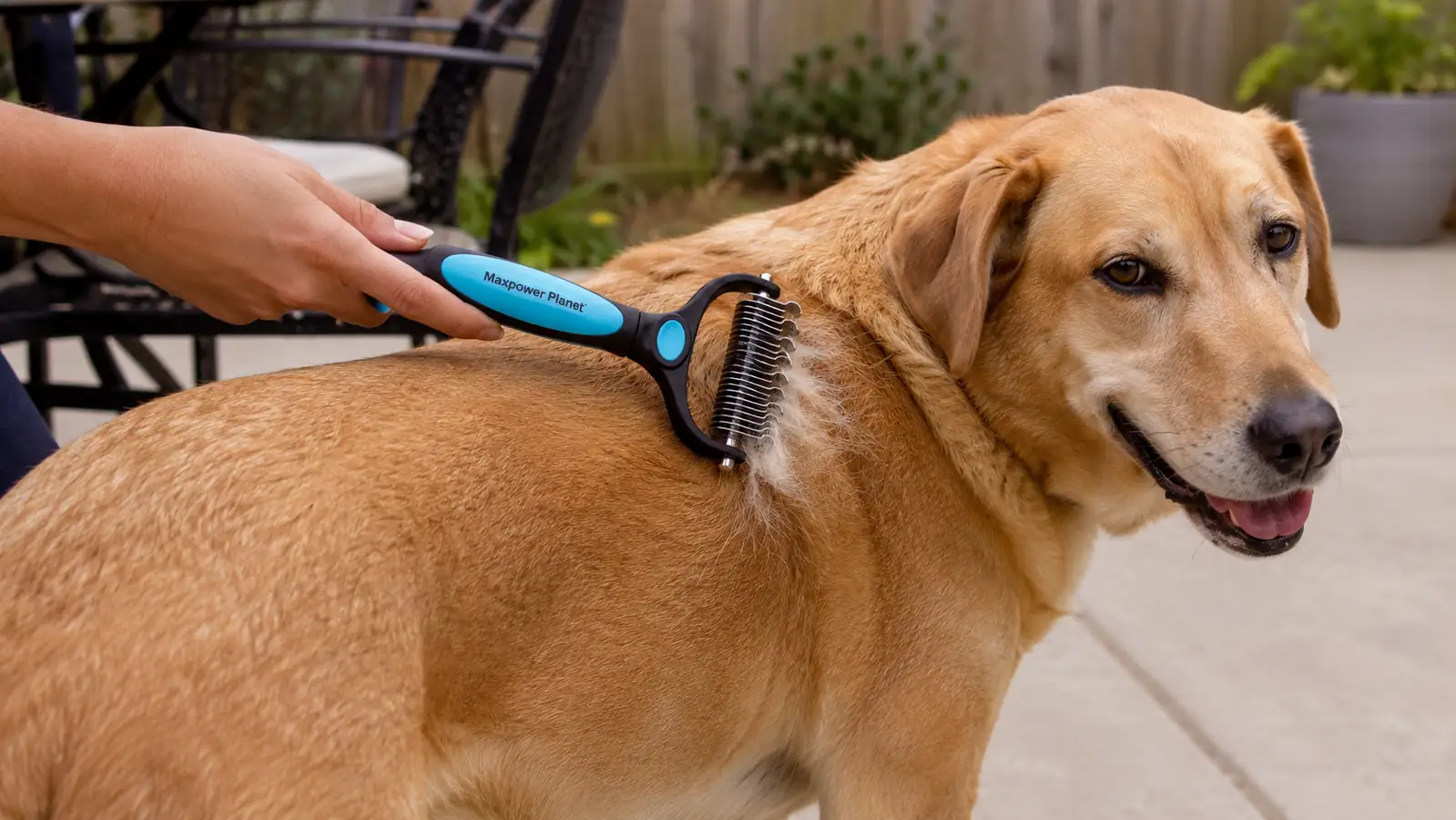
The tool that changed things for us is a simple double-sided undercoat rake, the Maxpower Planet grooming rake, which sounds almost too basic to matter. But the tool is only half of it. What actually stopped the hair from taking over my house was pairing that rake with a routine I could stick to on a normal work week, done the right way, in the right place, at the right time. That's what this guide walks through, step by step, with the Maxpower rake doing the heavy lifting in step two.
See the tool that actually gets the loose undercoat out, not just the top layer
This is the double-sided rake I use on Biscuit every week. It has a wide side for heavy shedding and a finer side for finishing touches, and it pulls out the dead undercoat that regular brushes just push around instead of removing.
Amazon Check Today's Price on Amazon →Step 1: Build a Short, Weekly Routine Instead of a Seasonal Panic
The single biggest mistake I made for years was only brushing Biscuit when the shedding got bad enough to notice, usually a couple of times a year when his coat was blowing out for the season. By then I was trying to catch up on months of loose undercoat in one exhausting session, and it never actually worked. He'd shed just as much the next week because I'd go right back to ignoring it.
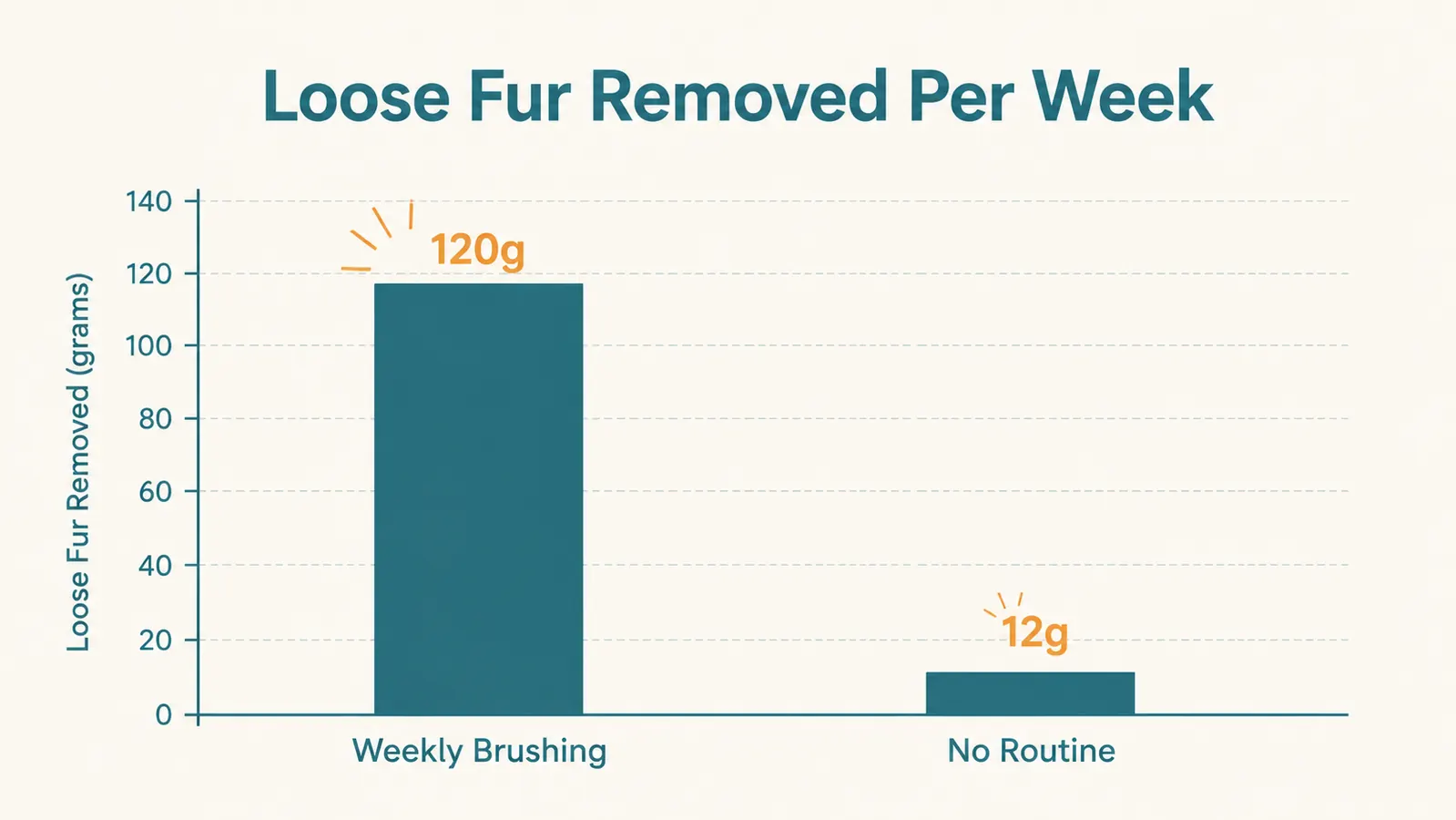
What actually works is doing it in small, boring, regular doses. I brush Biscuit for about ten minutes, twice a week, all year round, not just when I remember or when it gets bad. During the heavier shedding stretches in spring and fall, I bump that up to three short sessions a week instead of trying to do one long marathon brushing that neither of us enjoys.
Ten minutes sounds small, but it adds up fast. A short, consistent session gets ahead of the loose fur before it has a chance to work its way out on its own, all over your floors and furniture. Waiting until his coat looks obviously overdue means I'm always playing catch-up instead of staying ahead of it.
I keep the rake by the back door now, right next to the leash hooks, so it's genuinely as easy to grab as anything else on our way outside. Little things like that matter more than they should. A routine only survives if it's easier to do than to skip, and hunting around for the brush every time was enough friction to make me put it off.
Step 2: Get the Technique and Direction Right, and Take It Outside
For a long time I brushed Biscuit however felt natural, which turned out to be mostly wrong. The right way to use an undercoat rake is to work in the direction the fur grows, in short, gentle strokes, not against the grain and not digging in hard. Going against the direction of growth can pull on the skin and make the whole experience uncomfortable enough that your dog starts avoiding brush time altogether.
I start at his neck and work back toward his tail in the same direction his coat lies, using light pressure and letting the rake's teeth do the work instead of pressing down hard. The double-sided design on the Maxpower rake helps here, the wider teeth pull the bulk of the loose undercoat out first, then I switch to the finer side to catch what's left, which cuts down on how many passes I need to do overall.
I also learned to pay attention to problem spots. Biscuit mats a little behind his ears and along his back legs, so I go slower and gentler there, working small sections at a time instead of dragging the rake across the whole area in one motion. If you hit a tangle, it's worth stopping and working it loose with your fingers first rather than forcing the brush through it.
One change that made the biggest difference in my actual sanity: I stopped brushing him in the living room. Now every session happens outside on our back patio, weather permitting, or in the garage on rainy days. All that loose fur floats away or sweeps up outside instead of settling into the carpet and couch cushions I'd otherwise be vacuuming for a week.
Step 3: Do a Full Bath and Blow-Dry Before the Big Seasonal Coat Blow
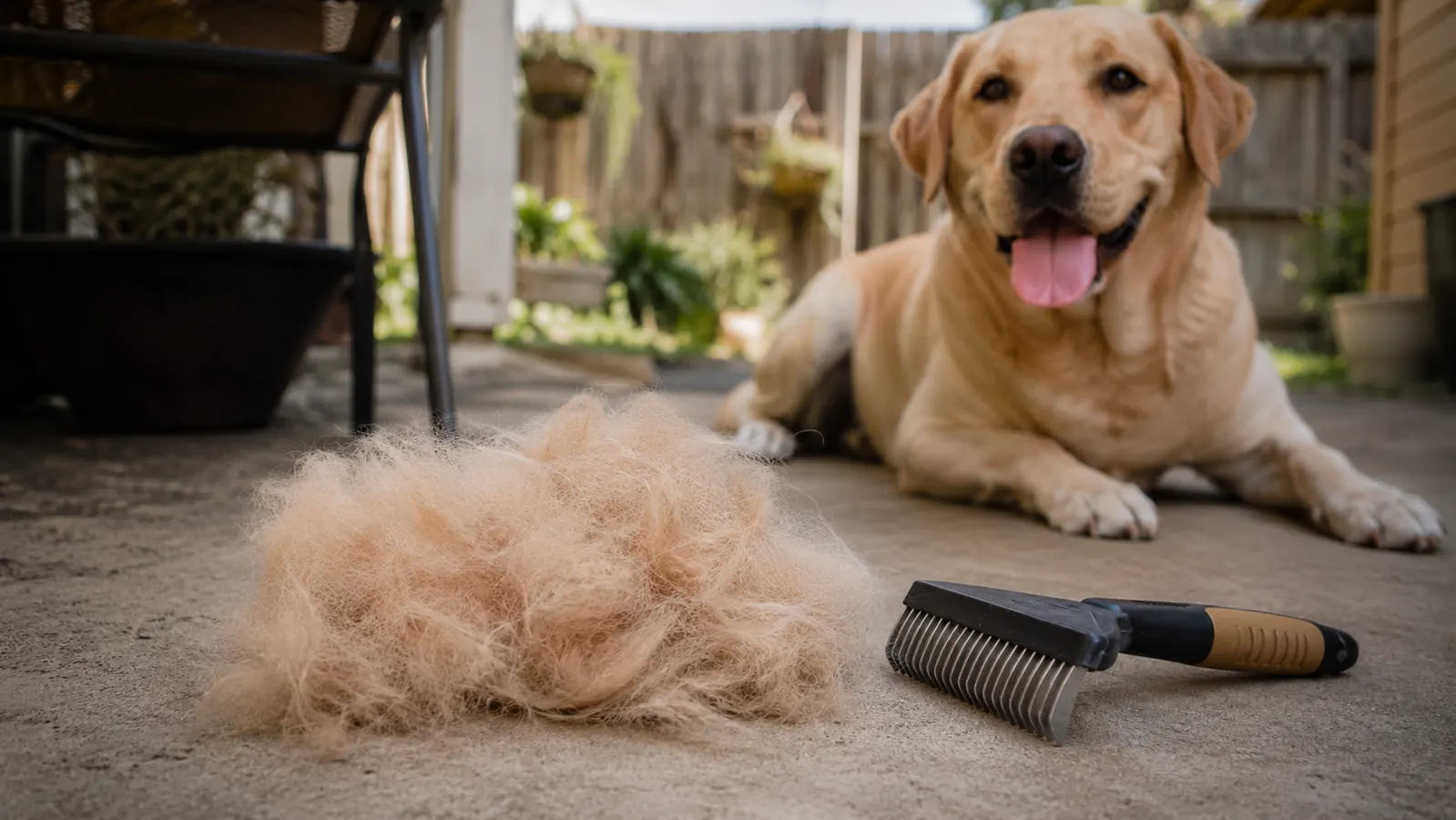
Regular weekly brushing handles the everyday shedding, but twice a year, spring and fall, Biscuit goes through what feels like a full coat change, and brushing alone doesn't quite keep up. For those stretches, I've started doing a proper bath first, then a thorough blow-dry, before going in with the rake.
The bath loosens up the dead undercoat that's ready to come out, and drying him with a dog-safe dryer on a cool or low setting, brushing outward as I go, physically blasts a huge amount of that loose fur free before I ever pick up the rake. Skipping straight to brushing a dry, un-bathed coat during a heavy shed means I'm working against fur that's still somewhat anchored in place.
After the bath and blow-dry, I follow up with the rake the same day while his coat is still slightly damp but mostly dry, since that seems to be when it comes loose easiest for him. It's more work up front, maybe forty-five minutes total between the bath, dry, and brush, but it means the following few weeks of regular ten-minute sessions are noticeably lighter.
Step 4: Protect Your Furniture and Reset Your Vacuum Routine
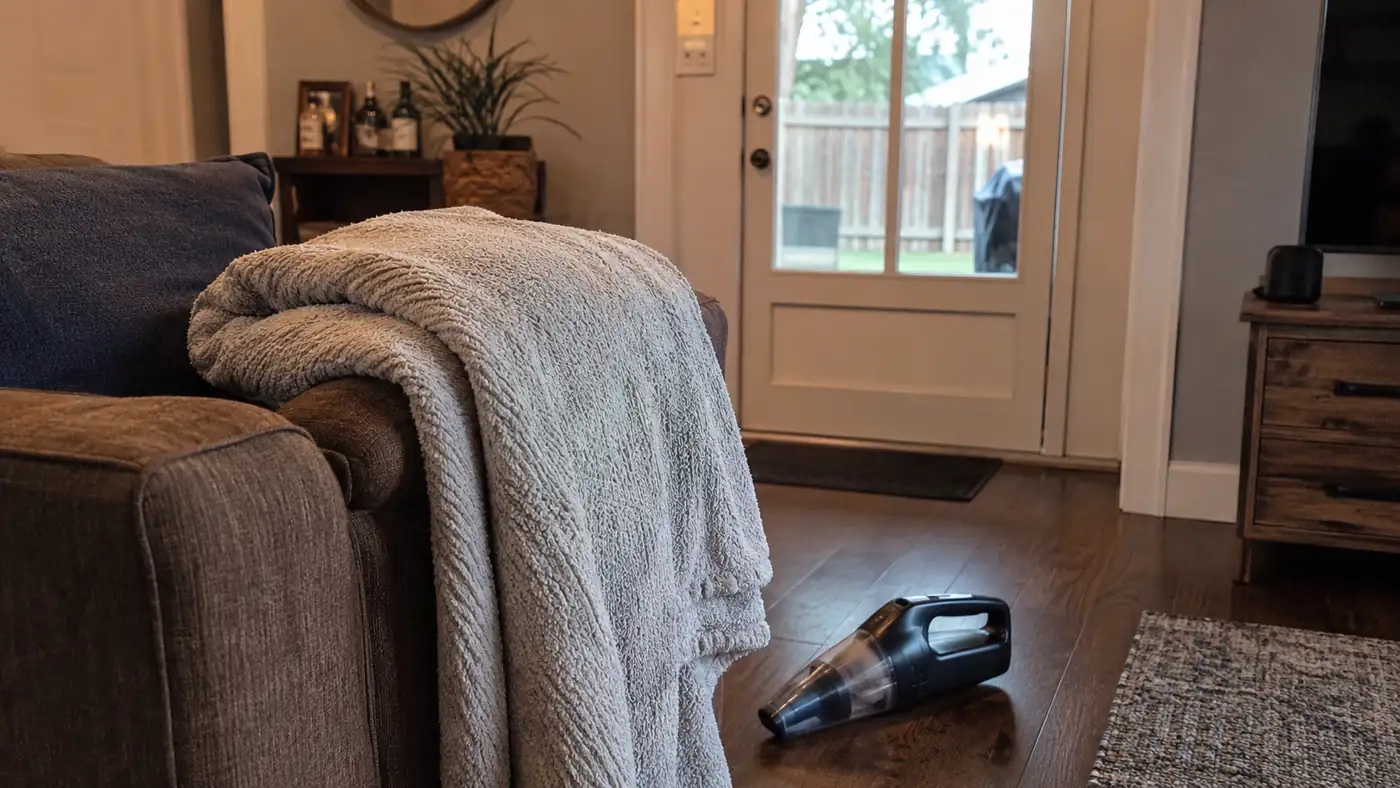
Even with a solid brushing routine, some fur is always going to end up on the couch, because Biscuit is not a dog who respects boundaries about furniture. Instead of fighting that battle, I gave in and covered his favorite spot with a washable throw blanket that I pull off and toss in the wash once a week. It's a lot easier to wash a five-dollar throw than to deep clean a couch cushion.
I keep a second throw in rotation so there's always one clean and ready while the other's in the wash, and I picked ones in a color close to his fur so the days between washes don't look quite so obvious. It sounds like a small thing, but it's probably done as much for our furniture as the brushing has.
On the vacuum side, I switched from vacuuming once a week to a quick pass every other day with a cordless handheld vacuum, focused just on the spots where Biscuit hangs out most, his bed, the rug by the back door, and that couch. A full deep vacuum still happens weekly, but the quick spot passes keep loose fur from building up into visible drifts along the baseboards between those bigger cleanings.
A vacuum with a good pet-hair attachment or a rubber-bristled floor tool makes a real difference here too. Fur tends to weave into carpet fibers in a way that a plain suction head struggles to lift, and I noticed a real drop in how much hair was left behind once I started using an attachment actually made for pet fur.
Step 5: Support Their Coat from the Inside with Diet and Hydration
None of the brushing or bathing in the world fully makes up for a dog whose coat isn't being fed well from the inside. A dry, brittle coat sheds more, and it sheds unevenly, which is part of why our vet asked about Biscuit's food when I mentioned how much he was shedding. She pointed out that a diet with enough quality protein and the right balance of fatty acids supports healthier skin and a coat that holds together better between brushings.
I started adding a small amount of fish oil to his food a few times a week, something our vet approved for his weight and food amount, and I make sure he's got fresh water available at all times, since a dehydrated dog's skin and coat show it fast. It's a slower kind of change than brushing, more like weeks-to-months before you notice a difference, but it's part of why his coat feels less dry and brittle than it used to.
This part matters for cats too. Our tabby Pepper is nowhere near as dramatic a shedder as Biscuit, but she goes through the same seasonal coat changes, and keeping her hydrated and on a decent food matters just as much for her coat as it does for his. I use the finer side of the same rake on her about once a week, in short two-minute sessions since she has very clear opinions about how long grooming is allowed to last.
What Else Helps
A few smaller things round out the routine without being essential on their own. I keep a lint roller in the car and by the front door for quick touch-ups before I leave the house, and I switched our bedding to a tighter-weave fabric that seems to hold onto less fur than the fleece throw we used to have on the bed. Neither replaces the brushing, but both cut down on the fur that manages to escape it.
I also started doing a quick once-over with the rake right after Biscuit comes in from a muddy or wet trip outside, before he has a chance to shake and settle onto the rug. It only takes a minute and it catches loose fur that a wet coat tends to release the moment it dries.
Our senior Beagle Maple sheds less overall, but her coat has gotten a little thinner and more brittle with age, so I've had to slow down and use lighter pressure on her than I do on Biscuit. If you've got an older dog, it's worth treating deshedding a little more gently than you would with a younger one, since aging skin can be more sensitive than it used to be.
The week I moved brushing outside instead of doing it on the living room rug, our actual vacuuming time dropped by half.
One honest caution before you build any of this into your own routine: normal shedding, even heavy seasonal shedding, is different from a real skin problem. If your dog develops sudden or patchy hair loss, bald spots, or skin that looks red, scabbed, or itchy enough that they're constantly scratching or chewing at it, that's not something to brush through. That's a vet visit, not a grooming fix, and pushing forward with a deshedding routine on top of an underlying skin issue can make things worse.
Assuming your dog's shedding is the normal kind, just a lot of it, this five-step routine is genuinely all it took to get our house back under control. Nothing here is complicated or expensive. It's a short weekly habit, the right technique, an occasional bath before the big seasonal blow, a little furniture protection, and paying attention to what's going into their bowl. Put together, it's made a bigger difference than any single product could on its own.
Ready to build this routine into your own week?
If loose fur is taking over your furniture and floors the way it used to at our place, the double-sided rake is the one tool in this whole routine I'd tell you not to skip.
Amazon Check Today's Price on Amazon →