

When we adopted Biscuit from a local rescue a couple of years back, the intake notes called him easygoing, and for the first month at home, easygoing is exactly what he was. Then my work hours picked back up to full days, and a dog who'd had company around most of the day suddenly had several hours alone. He started greeting me at the door with a shredded doormat, a chewed corner of the baseboard, and once, memorably, half a roll of paper towels dragged into the living room. Add in thunderstorms and fireworks on top of that, and I had a dog who was anxious about more than just loud noises.
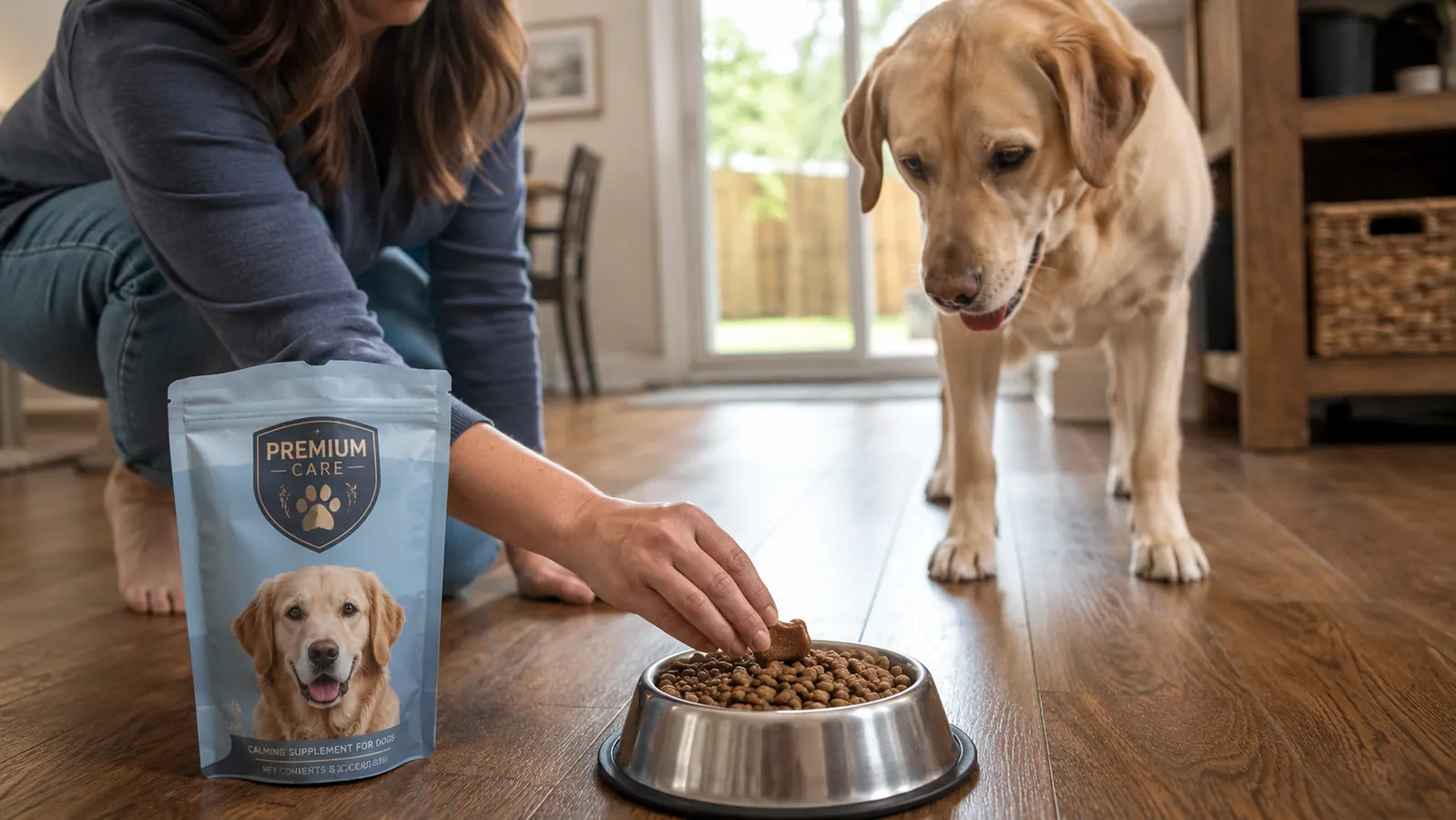
I'd already tried calming chews on and off around specific trigger days, storms mostly, with decent results. What I hadn't tried was giving them every single day for a long stretch, the way you would with an actual daily supplement, to see whether consistent use built any kind of calmer baseline instead of just softening one bad night at a time. So I picked up the PREMIUM CARE Calming Chews, the same 120-count bag I'd used before, and committed to giving Biscuit one every morning with breakfast for six months straight, tracking how he did along the way.
The Quick Verdict
It helped, but not consistently and not dramatically. Daily use took a noticeable edge off Biscuit's general jumpiness within the first two months, but it never came close to solving the alone-time destruction, and results clearly varied by situation rather than improving in a straight line.
Amazon Check Today's Price →Wondering if daily use is worth trying on your own dog?
Check today's price and current availability for the PREMIUM CARE Calming Chews on Amazon before you commit to a long-term trial.
Amazon Check Today's Price on Amazon →How I've Used It
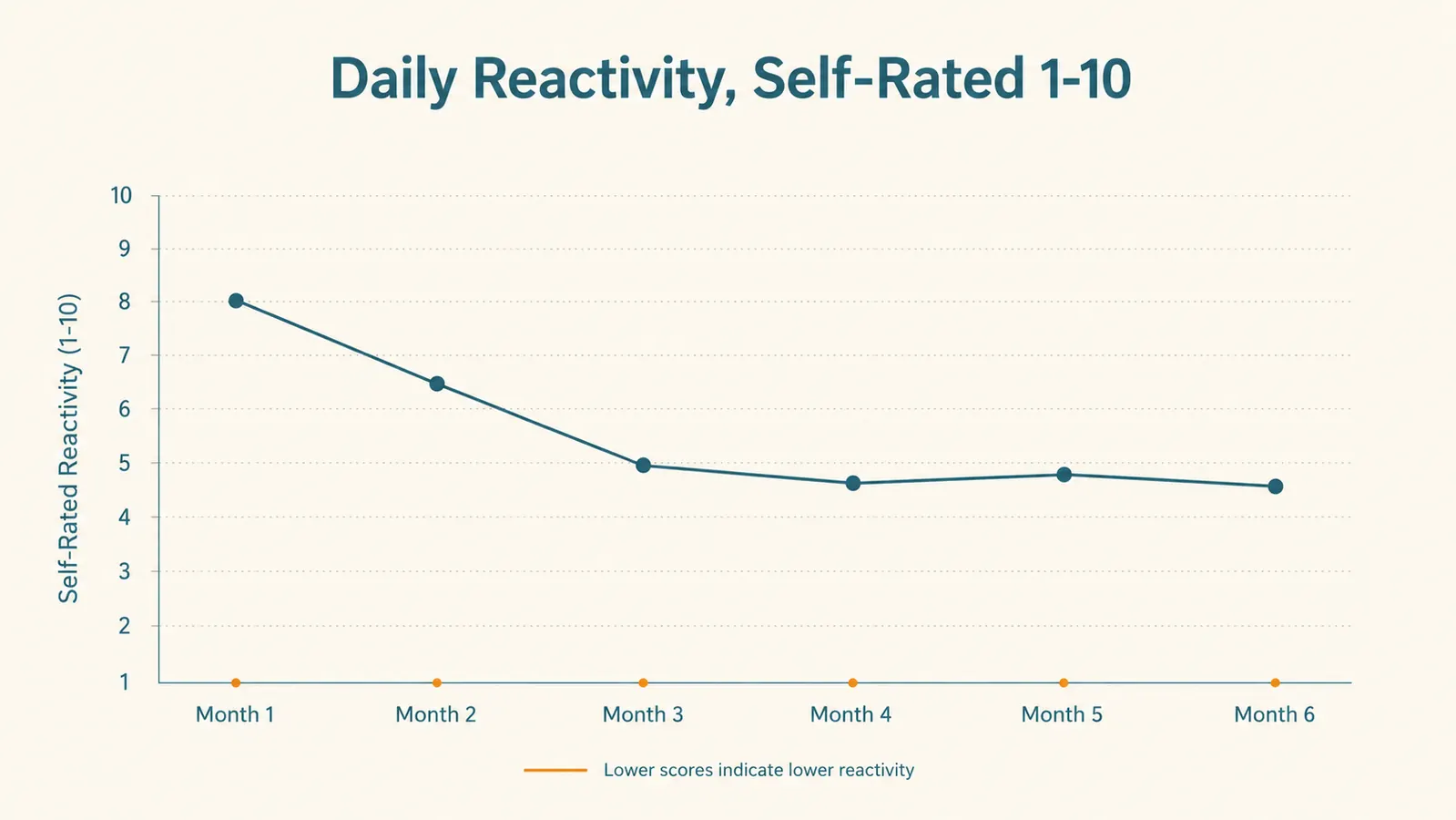
I want to be upfront that I'm not a vet, and this is one dog's experience over six months, not a controlled study. Biscuit is a Lab mix who I'd guess weighs around 68 pounds, and per the label for dogs in his weight range, he got one chew a day, given with breakfast rather than saved only for known trigger events. I kept a running note on my phone rating his general jumpiness and reactivity on a rough 1 to 10 scale each week, mostly so I wasn't relying on memory alone trying to reconstruct six months of ordinary Tuesdays.
I didn't change his food or his exercise during this stretch, though I'll admit that's not entirely true either, because around month two I started leaving a frozen food puzzle for him on days I worked a full shift, partly out of guilt and partly because a bored anxious dog and a busy one are not the same dog. That's a real confound I can't fully separate out, and I'll come back to it. He wasn't on any other calming product or medication during this window, and my other dog Maple, a senior Beagle who mostly just wants her joints to stop aching, was not part of this experiment at all since her issues are stiffness, not stress.
The chews themselves are soft, easy to break apart, and Biscuit, being about as food motivated as a dog can get, never once turned his nose up at one. That's a genuinely low bar for him though. He once ate a sock. Pepper the cat, for what it's worth, has never shown a hint of interest in loud noises, storms, or much of anything besides her own schedule, so whatever Biscuit is carrying, it isn't something the rest of the household shares.
Before I started, I mentioned the daily plan to our vet at Biscuit's annual visit, mostly to make sure there was no reason not to give a calming chew alongside his regular food every day for months at a stretch. She didn't have any concerns given his weight and general health, though she was upfront that she couldn't promise it would do much, since her clinic hears mixed feedback on calming chews generally, more so than they do on joint supplements. That honesty stuck with me going in, and it's part of why I tracked things as closely as I did instead of just assuming it was working because I wanted it to.
What's Actually in It
The label lists a blend built around chamomile, L-tryptophan, and ginger root, ingredients you'll see repeated across most calming chew products on the market, alongside a soft chew base that Biscuit treats more like a treat than a supplement. Chamomile and L-tryptophan in particular show up often in these formulas, marketed around promoting relaxation, though I want to be honest that the research behind calming supplements for dogs is thinner and more mixed than the research behind something like joint supplements. There isn't strong clinical evidence that any over-the-counter calming chew reliably reduces anxiety across the board, and results in the Amazon reviews for this product are genuinely all over the map, some owners reporting a real difference and plenty of others saying their dog showed no change at all.
That mixed track record is reflected in the product's own rating, which sits closer to 4 out of 5 stars rather than the near-perfect scores you sometimes see on joint supplements, and I think that's an honest reflection of how inconsistently these work dog to dog rather than a sign of a bad product. This is also, importantly, not a sedative. It's not going to knock a dog out or override a genuine panic response, and I never saw anything that looked like drowsiness or grogginess in Biscuit, for better or worse. Some days I almost wished it worked more like a sedative, honestly, because a fully panicked dog during a bad storm needs more than 'slightly less wound up.'
Before settling into daily use, I also looked at a couple of alternatives. A vet tech friend mentioned pheromone diffusers as another option, and I actually ran one in the living room for about a month alongside the chews, which again muddies my data a little, but I didn't notice enough of a distinct effect from the diffuser alone to keep it going once the trial wound down. I also considered CBD-based calming products, which are covered in more depth in a separate comparison I wrote, but for this six-month stretch I wanted to isolate the chews as much as I reasonably could, so I stuck with just this one product.
What Changed, and What Didn't, Over Six Months
The first month, honestly, I didn't see much. My weekly reactivity notes sat around a 7 or 8 out of 10 for most of those first four weeks, and Biscuit was still coming apart at the doorbell, still pacing before storms, still leaving the occasional casualty on the days I worked late. I nearly gave up on the whole experiment around week five, chalking it up to another supplement that sounded better on the label than it worked in real life.
Somewhere in month two, I started noticing smaller things. He'd still bark at the doorbell, but the spin-and-pace afterward got shorter. Storms still got his attention, ears up, head turning toward the window, but the full-body shaking I used to see happened less often, maybe half the time instead of nearly every time. By month three my notes were consistently landing around a 5, and that's roughly where they stayed. Month four, five, and six didn't show much further improvement. If anything, the line flattened out, which tells me that whatever benefit daily use was providing, it topped out fairly early and then held steady rather than continuing to improve the longer we kept at it.
The alone-time destruction, though, barely budged. He still chewed a corner of a rug in month four. He still greeted me some evenings with that particular guilty look that means something didn't survive the day. Adding the food puzzle helped more with that specific problem than the chew ever did, which is an important distinction I don't think enough reviews make. A calming chew softened his generalized jumpiness a little. It did not solve what looks, on reflection, more like genuine separation-related distress, and I don't think it's fair to expect it to.
Who This Seemed Best Suited For
Based on six months with Biscuit, I'd point this toward dogs with mild to moderate everyday jumpiness, noise sensitivity, or situational stress, the kind of dog who gets worked up over the doorbell, storms, or a busy household, but who isn't tearing apart the house or hurting himself when left alone. It's also reasonable for owners who want a low-effort daily habit to try alongside other changes, like more exercise or enrichment, rather than something you hand a dog once and expect to fix everything on its own.
I'd also say it's worth trying if you've got a dog whose anxiety seems mild enough that you genuinely aren't sure whether it needs a bigger intervention. Six months gave me a much clearer answer for Biscuit than one storm season did. The chews are doing something for his baseline reactivity. They're not doing enough for the deeper stuff, and now I know that with more confidence than I did before I started.
Tradeoffs and Alternatives Considered
The biggest honest tradeoff is that results plateaued and never got dramatic. If you're hoping daily use for months will eventually produce a fully relaxed dog, I didn't see that happen, and I'd be skeptical of any review that claims it did. I also can't cleanly separate the chew's effect from the food puzzle I added partway through, which is a limitation of doing this as a real household experiment instead of a lab study. If I were redoing this, I'd have held that variable steady longer before changing anything.
Cost is worth mentioning too, since a 120-count bag at one chew a day covers about four months, so this is an ongoing line item if you keep a dog on it long-term rather than a single purchase. I didn't see any digestive upset over the full six months, which was a relief since Biscuit has a habit of reacting badly to new ingredients, but that's anecdotal and every dog's tolerance is different. I'd start with a partial dose the first few days for a dog with a sensitive stomach, just to be safe.
I also looked into working with a trainer or behaviorist on the alone-time destruction specifically, since that's the piece the chew never touched. We haven't gotten there yet, partly budget and partly the usual busy-life procrastination, but if I were starting over knowing what I know now, I'd treat the chew as a small supporting piece of a bigger plan rather than the plan itself. It's a modest, low-cost add-on to a routine, but it's not a substitute for actual training work if destructive behavior is the main problem you're trying to solve.
What I Liked
- Easy daily habit, Biscuit never once refused it
- No digestive upset or drowsiness over six full months
- Noticeable reduction in general jumpiness and storm reaction by month two or three
- Reasonable ongoing cost for a daily-use supplement
- Useful as one piece of a broader routine alongside enrichment and exercise
Where It Falls Short
- Results plateaued around month three and never improved further
- Did little to nothing for alone-time destruction or genuine separation distress
- Not a sedative, so it won't help during a full panic response
- Hard to isolate from other changes made during the same stretch
- Rated closer to 4 out of 5 stars for a reason, plenty of dogs show little to no response
It softened Biscuit's baseline jumpiness. It did not fix a dog who tears up a doormat when he's left alone too long, and I don't think it was ever fair to ask it to.

Who This Is For
I'd recommend this to owners of dogs with mild, everyday reactivity, noise sensitivity, or situational nerves who want a simple daily habit to try alongside other changes. It's a reasonable, low-cost first step, especially if you're not yet sure how serious the underlying issue is and want more information before deciding whether a bigger intervention is worth pursuing.
Who Should Skip It
If your dog has diagnosed severe separation anxiety, is self-injuring, or panics to the point of hurting himself or destroying a crate, this chew is not going to be enough, and I'd talk to your vet about a real treatment plan, which may include actual prescription medication rather than an over-the-counter supplement. That's not a knock on the product, it's just not built for that level of distress, and six months with Biscuit taught me the difference between 'jumpy dog' and 'dog in genuine crisis' matters a lot more than the marketing on any calming chew bag suggests.
Considering a long-term daily trial for your own dog?
This is the exact bag I've kept in Biscuit's routine for six months and counting. It's not a cure-all, but for everyday jumpiness it's earned its spot in our cabinet.
Amazon Check Today's Price on Amazon →